
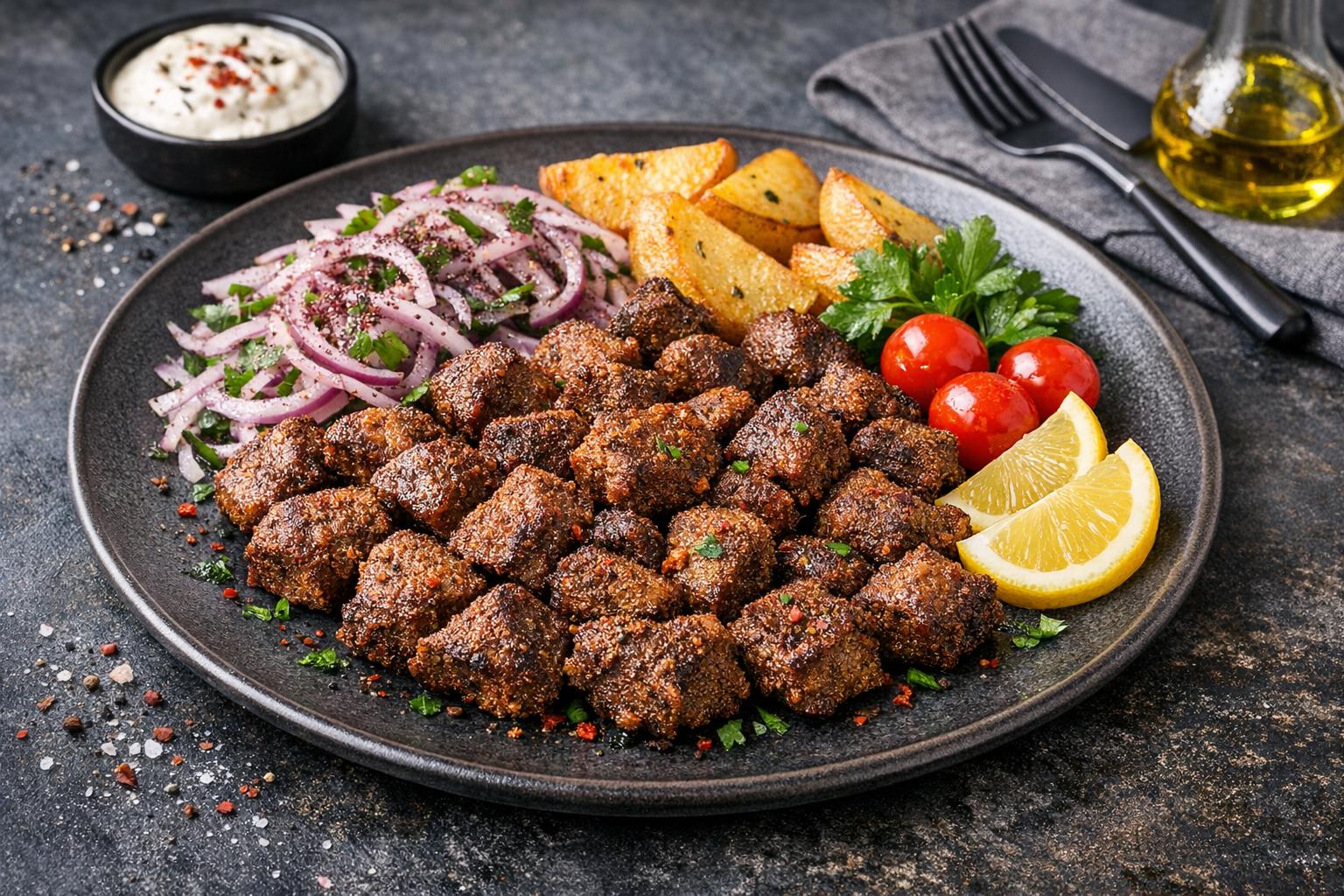
Albanian-Style Fried Liver with Onions
Arnavut Ciğeri
This classic Turkish dish features tender cubes of lamb or beef liver fried until golden and served with caramelized onions and fresh herbs. The liver has a rich, slightly mineral flavor with a crispy exterior and soft interior. It's a beloved meze that showcases the Ottoman culinary tradition of transforming simple ingredients into something extraordinary.
Ingredients
Instructions
-
Prepare the liver
Remove any veins or membranes from the liver and cut into 2cm cubes. Rinse under cold water and pat completely dry with paper towels. Season with salt and pepper, then toss with flour until evenly coated. Do not let the liver sit too long after cutting or it will become tough.
-
Slice the onions
Cut the onions into thin half-moon slices, about 3mm thick. Heat 2 tablespoons oil in a large skillet over medium heat for 1-2 minutes. Add onions and cook for 8-10 minutes, stirring occasionally, until golden and caramelized. Do not rush this process or the onions will burn instead of caramelizing.
-
Cook the onions
Continue cooking the onions over medium heat for another 5-7 minutes until they are deep golden brown and very soft. Season with a pinch of salt and transfer to a plate. Do not leave them in the hot pan or they will continue cooking and become bitter.
-
Fry the liver
Heat the remaining 2 tablespoons oil in the same skillet over high heat for 1 minute until very hot. Add the floured liver pieces in a single layer and cook for 2-3 minutes without moving them until golden brown on the bottom. Do not overcrowd the pan or the liver will steam instead of frying.
-
Finish cooking liver
Turn the liver pieces and cook for another 1-2 minutes until golden brown on all sides but still slightly pink inside. The total cooking time should not exceed 5 minutes or the liver will become tough. Do not press down on the pieces while cooking.
-
Combine and serve
Return the caramelized onions to the pan with the liver and toss gently for 30 seconds over low heat to combine. Remove from heat immediately and transfer to a serving plate. Sprinkle with chopped parsley, sumac, and serve with lemon wedges. Do not keep the dish warm for too long as the liver will continue cooking.
Tips
Cooking Tips
Soak the liver in milk for 30 minutes before cooking to remove any residual blood and ensure a milder flavor. Always cook liver over high heat for a short time to maintain tenderness.
Alternatives
Beef liver can be substituted for lamb liver but may have a slightly stronger flavor. If sumac is unavailable, use a squeeze of pomegranate molasses mixed with a pinch of paprika.
Serving & Storage
Traditionally served immediately as a hot meze with fresh bread, onions, and rakı or ayran. Leftovers should be consumed within 24 hours and gently reheated, though the texture is best when freshly made.
Leave a Comment