
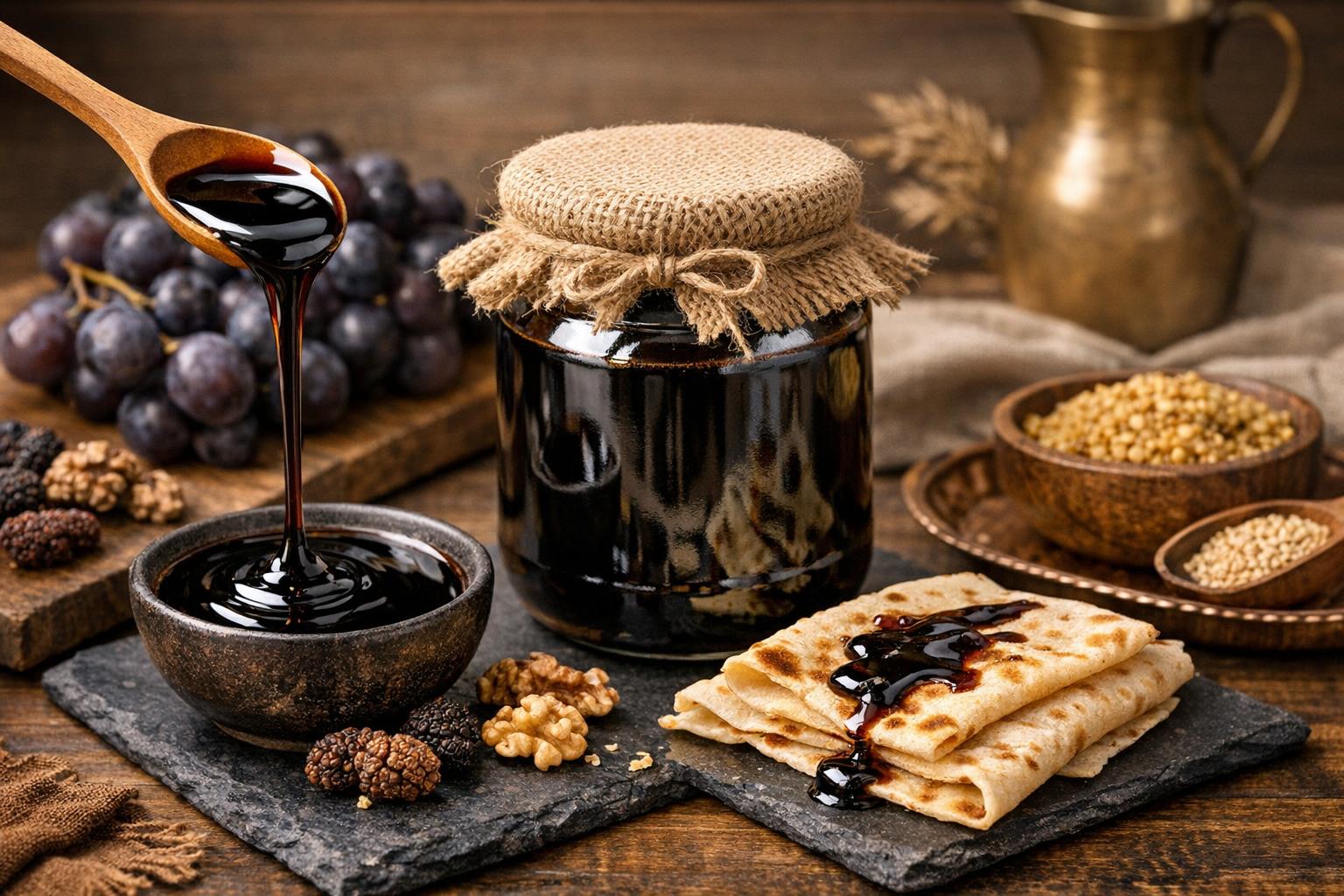
Traditional Turkish Molasses (Grape Syrup)
Yöresel Pekmez
This thick, dark syrup has a rich, concentrated grape flavor with subtle earthy undertones and natural sweetness. The glossy, molasses-like consistency coats the spoon beautifully and has an intense, almost wine-like aroma. Making your own pekmez connects you to centuries of Turkish tradition while creating a versatile sweetener that's healthier than refined sugar.
Ingredients
Instructions
-
Extract grape juice
Wash grapes thoroughly and remove from stems. Place grapes in a large pot and crush them by hand or with a potato masher. Cook over medium heat for 15-20 minutes until grapes release their juice and become very soft and pulpy. Do not add any water as this will dilute the final product.
-
Strain the liquid
Line a large strainer with clean white cloth and place over a bowl. Pour the cooked grape mixture into the cloth. Gather the cloth corners and squeeze firmly to extract maximum juice. Let it drain for 30-45 minutes until you get clear, pure grape juice. Do not press too hard or you'll get pulp in the juice.
-
Begin slow cooking
Pour the strained grape juice into a wide, heavy-bottomed pan. Add lemon juice and cook over low heat for 2-3 hours, stirring occasionally. The juice should barely bubble and never boil rapidly. Do not cover the pan as you want moisture to evaporate slowly.
-
Continue reduction
Keep cooking over low heat for another 3-4 hours, stirring every 20-30 minutes. The juice will slowly turn darker and thicker. It's ready when it coats the back of a spoon and drips slowly in thick drops. Do not rush this process with higher heat or the pekmez will burn.
-
Test consistency
Drop a small amount onto a cold plate. Let it cool for 2-3 minutes. If it maintains its shape and doesn't run, it's ready. The final pekmez should be thick like honey but still pourable when warm. Do not overcook as it will become too thick and bitter.
-
Cool and store
Remove from heat and let cool completely for 45-60 minutes, stirring occasionally to prevent skin forming. Pour into sterilized glass jars while still slightly warm. The pekmez will thicken more as it cools. Do not seal jars until completely cool to prevent condensation.
Tips
Cooking Tips
Use a wide, shallow pan to speed evaporation and stir with a wooden spoon to prevent sticking. The key is very low, patient heat - rushing will burn the sugars and create a bitter taste.
Alternatives
You can make pekmez from other fruits like mulberries, figs, or apricots using the same method. Each fruit creates different flavors - mulberry pekmez is earthier while fig pekmez is sweeter.
Serving & Storage
Traditionally eaten with fresh bread and cheese for breakfast, or mixed into yogurt. Store in glass jars at room temperature for up to 1 year. Refrigerate after opening and use within 6 months.


Leave a Comment