
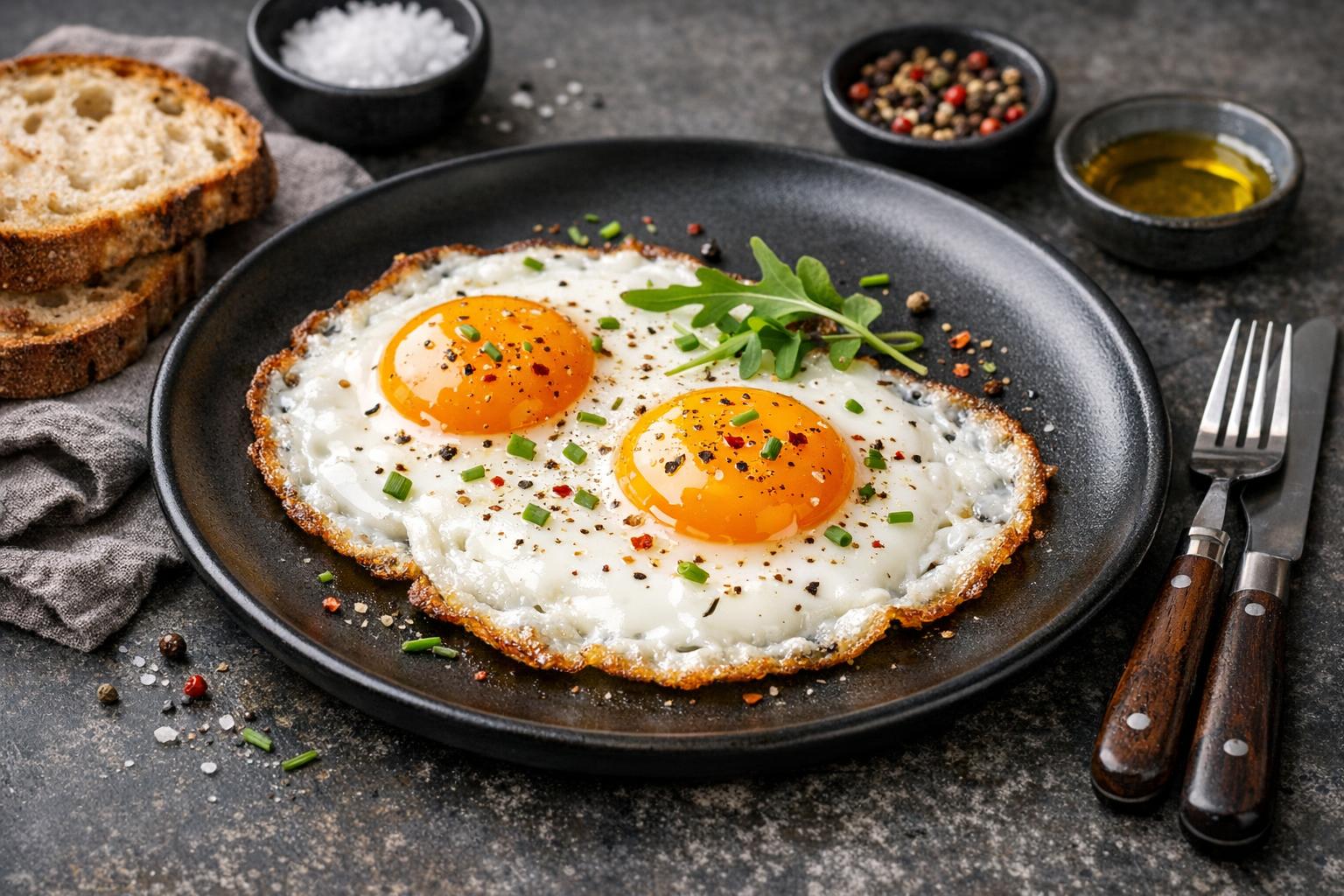
Turkish Fried Eggs in Cast Iron Pan
Sahanda Yumurta
These Turkish fried eggs have crispy, golden edges and perfectly runny yolks that create a rich, creamy sauce when broken. The eggs are cooked in a traditional cast iron pan called a 'sahan' that gives them their distinctive appearance with lacy, caramelized whites. This is the ultimate comfort breakfast that transforms simple eggs into something truly special.
Ingredients
Instructions
-
Heat the pan
Place a cast iron skillet or heavy-bottomed pan over medium-high heat for 2-3 minutes until very hot. The pan should be hot enough that a drop of water sizzles and evaporates immediately. Do not use low heat or the eggs will cook too slowly and become rubbery.
-
Add butter
Add butter to the hot pan and let it melt completely over medium-high heat for 30-60 seconds. Swirl the pan to coat evenly and watch for the butter to foam and turn light golden brown with a nutty aroma. Do not let the butter burn or turn black.
-
Crack the eggs
Crack each egg directly into the hot butter, one at a time, spacing them evenly in the pan. Keep the heat at medium-high and cook for 2-3 minutes until the whites start to set and develop golden, crispy edges around the perimeter. Do not move or flip the eggs during this time.
-
Season the eggs
Sprinkle salt, black pepper, and red pepper flakes evenly over the eggs while the whites are still slightly translucent in the center. Continue cooking on medium-high heat for another 1-2 minutes until the whites are completely opaque but yolks remain runny. Do not overcook or the yolks will become hard.
-
Check doneness
The eggs are ready when the whites are completely set with golden-brown, lacy edges and the yolks still jiggle slightly when the pan is gently shaken. The total cooking time should be 3-4 minutes for perfect runny yolks. Do not cook longer than 5 minutes or the yolks will overcook.
-
Serve immediately
Remove the pan from heat and serve the eggs immediately while still sizzling hot in the same pan. The residual heat will continue cooking the eggs slightly, so serve within 1-2 minutes of removing from heat. Do not let them sit in the hot pan or they will become overcooked.

Leave a Comment