
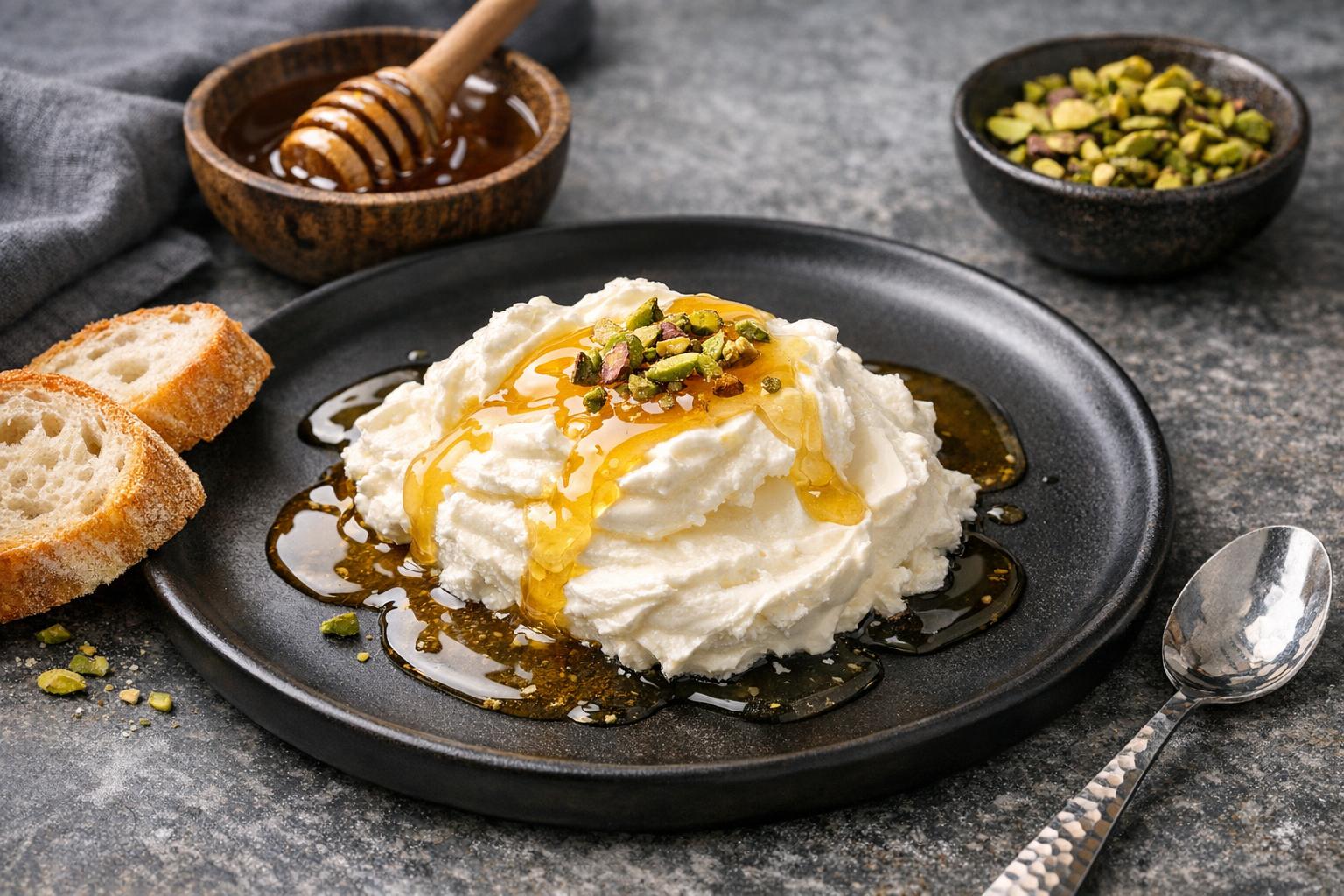
Turkish Honey Clotted Cream
Bal Kaymak
A luxurious combination of thick, silky clotted cream drizzled with golden honey that melts on your tongue with rich, sweet flavors. This elegant white cream topped with amber honey creates a stunning contrast that's both visually appealing and irresistibly indulgent. Perfect for anyone seeking an authentic taste of Turkish breakfast tradition or a sophisticated dessert.
Ingredients
Instructions
-
Prepare milk mixture
Pour whole milk and heavy cream into a wide, heavy-bottomed saucepan. Heat over low heat for 8-10 minutes until it reaches 80°C, stirring gently to prevent sticking. The mixture should be steaming but not bubbling. Do not let it boil or the proteins will curdle.
-
Add flavorings
Remove from heat and stir in vanilla extract and lemon juice using a wooden spoon. Mix for 1-2 minutes until well combined. The mixture should smell fragrant and have a slight tang. Do not overmix or the cream may separate.
-
Cool and form skin
Transfer to a wide, shallow dish and let cool at room temperature for 45-60 minutes. A thick skin will form on top that wrinkles when touched. The surface should be golden-beige and hold its shape. Do not disturb the surface during cooling.
-
Refrigerate overnight
Cover carefully with plastic wrap, ensuring it doesn't touch the surface. Refrigerate for 12-24 hours over low temperature. The kaymak should be firm and thick enough to cut with a spoon. Do not move the dish frequently as this breaks the skin.
-
Harvest cream layers
Using a large spoon, carefully lift the thick cream layer from the surface. Work gently for 3-5 minutes, collecting all the concentrated cream. The texture should be smooth and hold its shape when spooned. Do not scrape the bottom liquid as it's too thin.
-
Serve with honey
Arrange portions of kaymak on individual plates and drizzle generously with honey. Serve immediately at cool temperature for 2-3 minutes to let flavors meld. The honey should pool slightly around the cream. Do not let it sit too long or the cream will soften.
Tips
Cooking Tips
Use the widest pan possible to maximize surface area for skin formation. The thicker the skin, the richer your kaymak will be. Temperature control is crucial - too hot and you'll get scrambled eggs instead of smooth cream.
Alternatives
Replace vanilla with orange blossom water for a more traditional flavor, or use maple syrup instead of honey for a different sweetness profile. Both alternatives will create a slightly more aromatic final product.
Serving & Storage
Traditionally served with fresh bread or simit for dipping. Store covered in the refrigerator for up to 3 days, though the texture is best within 24 hours. Serve alongside Turkish tea for an authentic breakfast experience.

Leave a Comment