
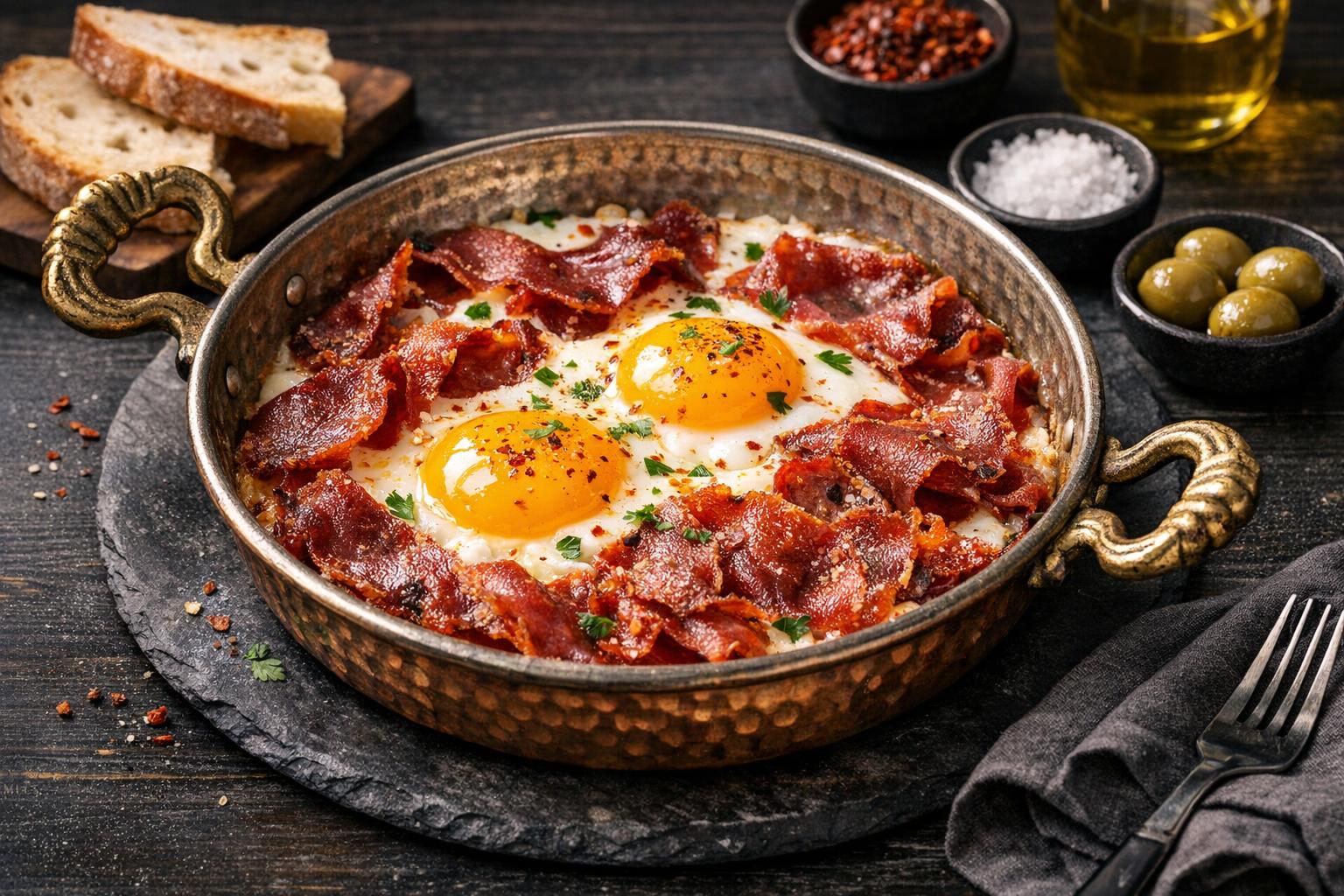
Turkish Pastirma and Eggs
Pastırmalı Yumurta
This classic Turkish breakfast combines spiced cured beef pastirma with perfectly cooked eggs, creating a rich and savory meal. The dish features golden runny yolks mixing with aromatic, slightly salty pastirma in a cast iron pan. It's the ultimate Turkish comfort food that transforms simple ingredients into an extraordinary breakfast experience.
Ingredients
Instructions
-
Prepare the pastirma
Remove pastirma from packaging and slice into thin strips about 5mm wide. Heat olive oil in a medium cast iron pan or heavy skillet over medium heat for 1 minute until shimmering. Do not use high heat as it will make the pastirma tough.
-
Cook the pastirma
Add pastirma strips to the hot oil and cook for 2-3 minutes, stirring occasionally until edges are slightly crispy and the meat releases its aromatic oils. The pastirma should sizzle gently and smell fragrant. Do not overcook or it will become chewy.
-
Add butter
Add butter to the pan and let it melt for 30 seconds, swirling to combine with the pastirma and oil. The butter should foam slightly and turn golden. Do not let the butter burn or turn brown.
-
Crack the eggs
Crack eggs directly into the pan, spacing them evenly around the pastirma. Cook on medium heat for 3-4 minutes until whites are set but yolks remain runny and jiggly when gently shaken. Do not flip the eggs or break the yolks.
-
Season and garnish
Sprinkle with a pinch of black pepper and chopped fresh parsley. Remove from heat immediately when whites are fully opaque but yolks still soft. The residual heat will continue cooking slightly. Do not add salt as pastirma is already very salty.
-
Serve immediately
Serve directly from the pan while still hot with warm Turkish bread on the side. The dish should be eaten within 2-3 minutes while the yolks are still warm and runny. Do not let it sit or the eggs will overcook.
Tips
Cooking Tips
Use a cast iron or heavy-bottomed pan to ensure even heat distribution and prevent hot spots that could burn the pastirma. Keep the heat at medium throughout to maintain the pastirma's tender texture.
Alternatives
If pastirma is unavailable, substitute with prosciutto or bresaola, though the flavor will be milder. You can also use sucuklu yumurta (Turkish sausage and eggs) for a spicier variation.
Serving & Storage
This dish must be served immediately and cannot be stored as the eggs will overcook. Traditionally served with Turkish pide bread, simit, or crusty village bread for dipping into the runny yolks. Pair with Turkish tea and fresh tomatoes.
Leave a Comment