
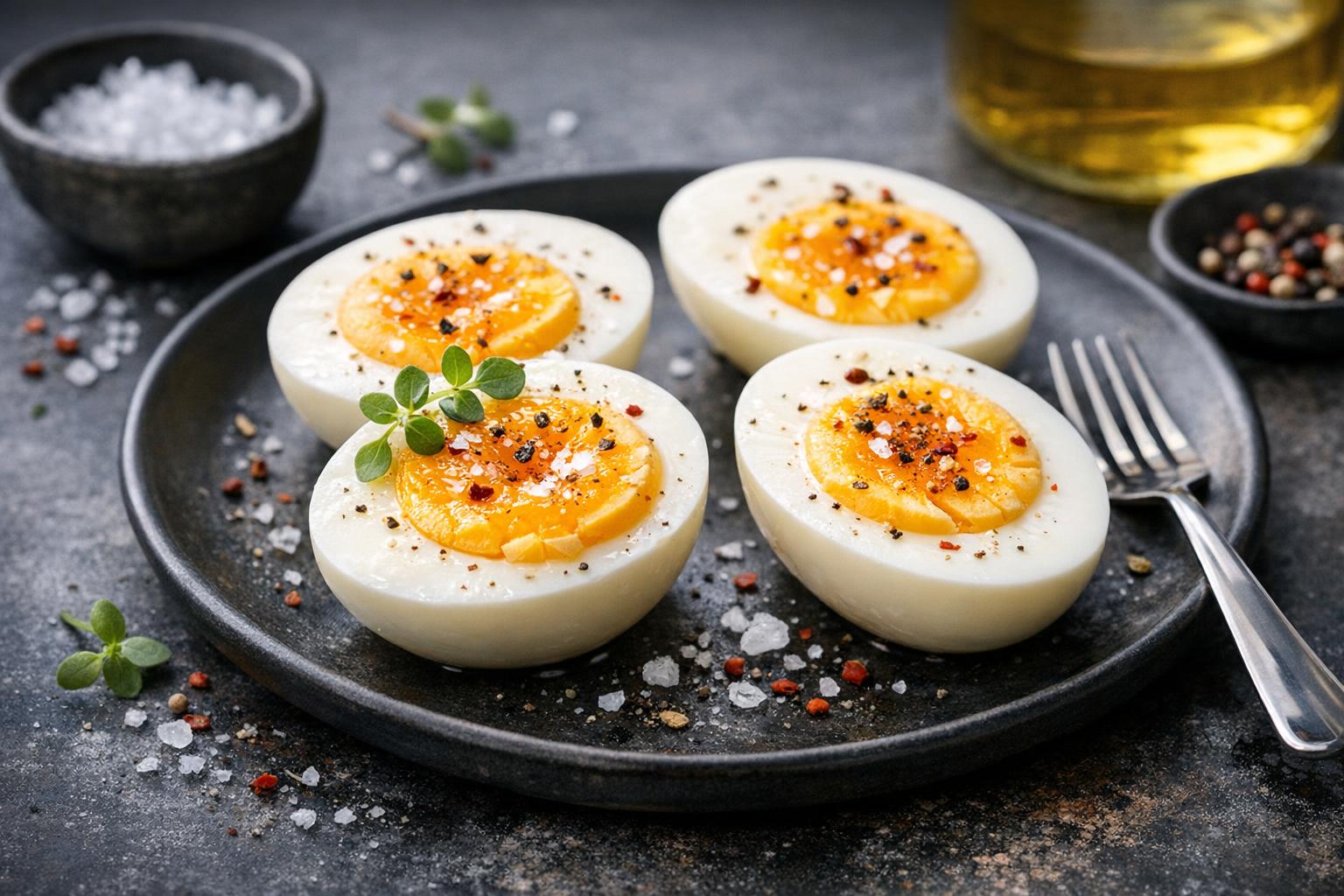
Turkish Soft-Boiled Eggs
Haşlanmış Yumurta
These perfectly soft-boiled eggs have silky whites and golden, runny yolks that create a luxurious texture. The eggs emerge with tender whites and creamy centers that flow beautifully when cut. This fundamental Turkish preparation delivers protein-rich comfort that's satisfying yet light.
Ingredients
Instructions
-
Prepare ice bath
Fill a large bowl with cold water and add ice cubes. Set aside near the stove. This ice bath will immediately stop the cooking process and prevent overcooking. Do not skip this step as it's crucial for achieving the perfect texture.
-
Bring water to boil
Pour water into a medium saucepan and add salt and vinegar. Bring to a rolling boil over high heat for 3-4 minutes. The vinegar helps prevent cracking and makes peeling easier. Do not add eggs until the water is at a full boil.
-
Add eggs carefully
Using a large spoon, gently lower each egg into the boiling water one at a time. Reduce heat to medium-high to maintain a gentle but steady boil for exactly 6 minutes. Do not drop the eggs directly as they may crack from the impact.
-
Time precisely
Cook the eggs for exactly 6 minutes, maintaining a gentle rolling boil over medium-high heat. Set a timer immediately when the last egg goes in. The whites should be just set and the yolks runny. Do not cook longer than 6 minutes or the yolks will begin to set.
-
Transfer to ice bath
Immediately remove eggs with a slotted spoon and plunge into the prepared ice bath. Let sit in ice water for 2-3 minutes to stop cooking completely. The shells should feel cool to touch. Do not leave in ice water longer than 5 minutes.
-
Peel and serve
Gently tap eggs all over and peel carefully under cool running water over low pressure. The shells should slip off easily. Serve immediately while still warm with the yolks beautifully runny. Do not peel too roughly as the whites are very delicate.
Tips
Cooking Tips
Use eggs that are 5-7 days old rather than very fresh ones, as they peel much easier and are less likely to have the whites stick to the shell when peeling.
Alternatives
If you don't have white vinegar, lemon juice works similarly to prevent cracking, or you can omit it entirely though peeling may be slightly more difficult.
Serving & Storage
Serve immediately with Turkish bread, beyaz peynir cheese, olives and tomatoes for a traditional breakfast. These eggs are best eaten fresh and don't store well once cooked.
Leave a Comment