
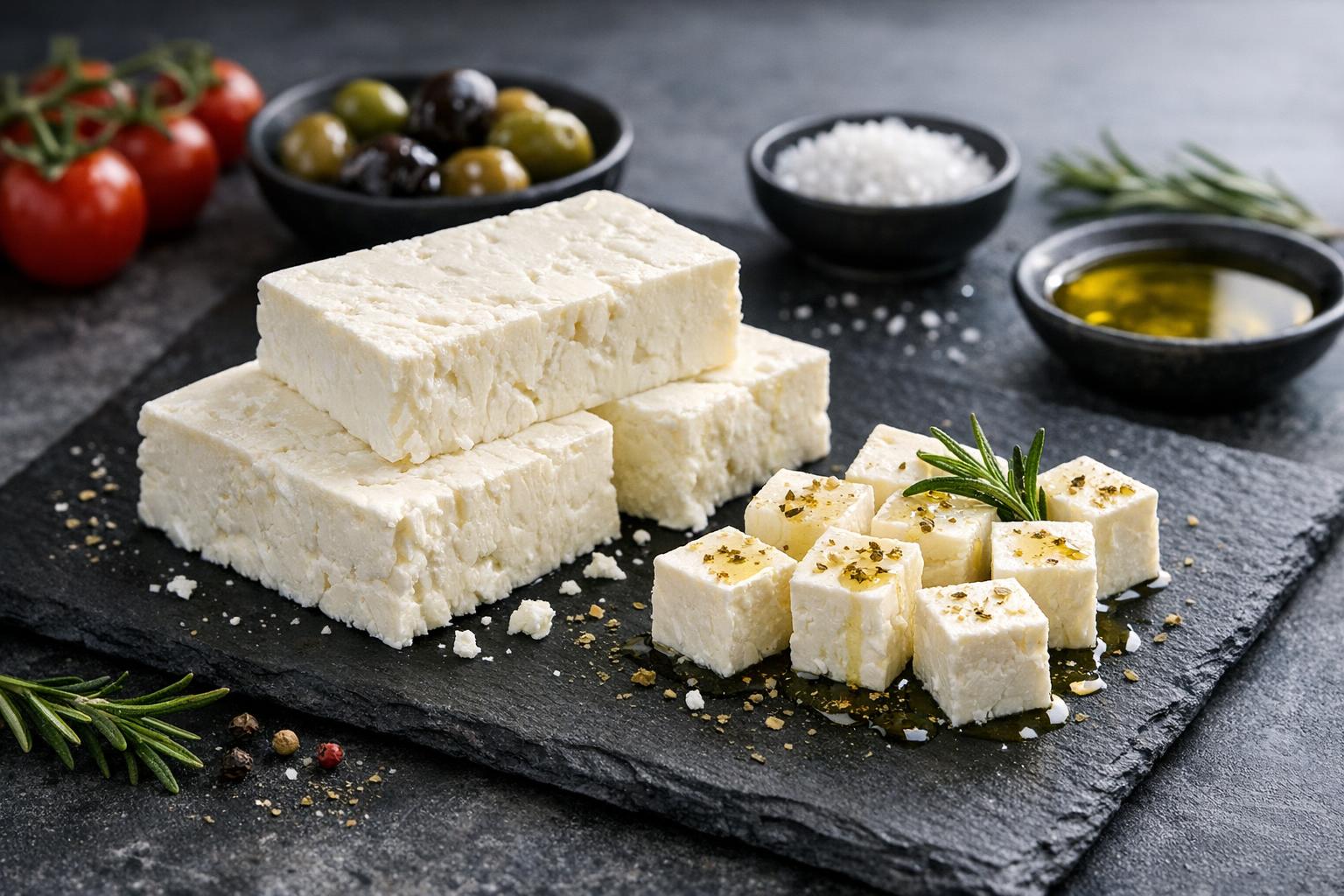
Turkish White Cheese (Beyaz Peynir)
Beyaz Peynir
This creamy, slightly salty white cheese has a smooth, crumbly texture that melts beautifully on the tongue. Its pure white color and mild tangy flavor make it incredibly versatile. Making your own beyaz peynir creates a fresher, more delicate cheese than store-bought versions.
Ingredients
Instructions
-
Heat the milk
Pour whole milk into a heavy-bottomed saucepan. Heat over medium-low heat for 8-10 minutes, stirring occasionally, until the milk reaches 85°C or small bubbles form around the edges. Do not let it boil vigorously or the milk will scorch.
-
Add acidic ingredients
Remove milk from heat and immediately stir in yogurt and lemon juice using a wooden spoon. Mix gently for 30 seconds over low heat until well combined and curdles begin to form. Do not overmix or the curdles will become tough and grainy.
-
Allow curdling
Cover the pan and let stand at room temperature for 45-60 minutes until clear whey separates from white curds. The mixture should look distinctly separated with yellowish liquid and white chunks. Do not disturb during this time or curdling may be incomplete.
-
Strain the curds
Line a fine mesh strainer with clean cheesecloth or muslin. Pour the curdled mixture through the cloth over medium heat for 2-3 minutes, allowing whey to drain completely. The curds should appear dry and crumbly. Do not press or squeeze the cloth as this makes the cheese dense.
-
Salt the cheese
Transfer drained curds to a bowl and gently fold in salt using clean hands for 1-2 minutes until evenly distributed. The cheese should hold together when pressed lightly but still crumble easily. Do not oversalt as the flavor will intensify during storage.
-
Shape and store
Form cheese into a compact block using clean hands over low pressure for 3-4 minutes until smooth. Wrap in clean cloth and refrigerate for 2-3 hours until firm and sliceable. Do not wrap too tightly or the cheese will become dense and rubbery.
Tips
Cooking Tips
Use a thermometer to monitor milk temperature precisely - overheating destroys the protein structure needed for proper curd formation, while underheating prevents adequate separation.
Alternatives
Replace lemon juice with white vinegar for a slightly milder tang, or use rennet tablets dissolved in water for a firmer, more traditional cheese texture that slices cleanly.
Serving & Storage
Serve at room temperature with fresh bread, tomatoes, and olives for authentic Turkish breakfast. Store wrapped in damp cloth in refrigerator for up to 5 days, changing cloth every 2 days to maintain freshness.


Leave a Comment