
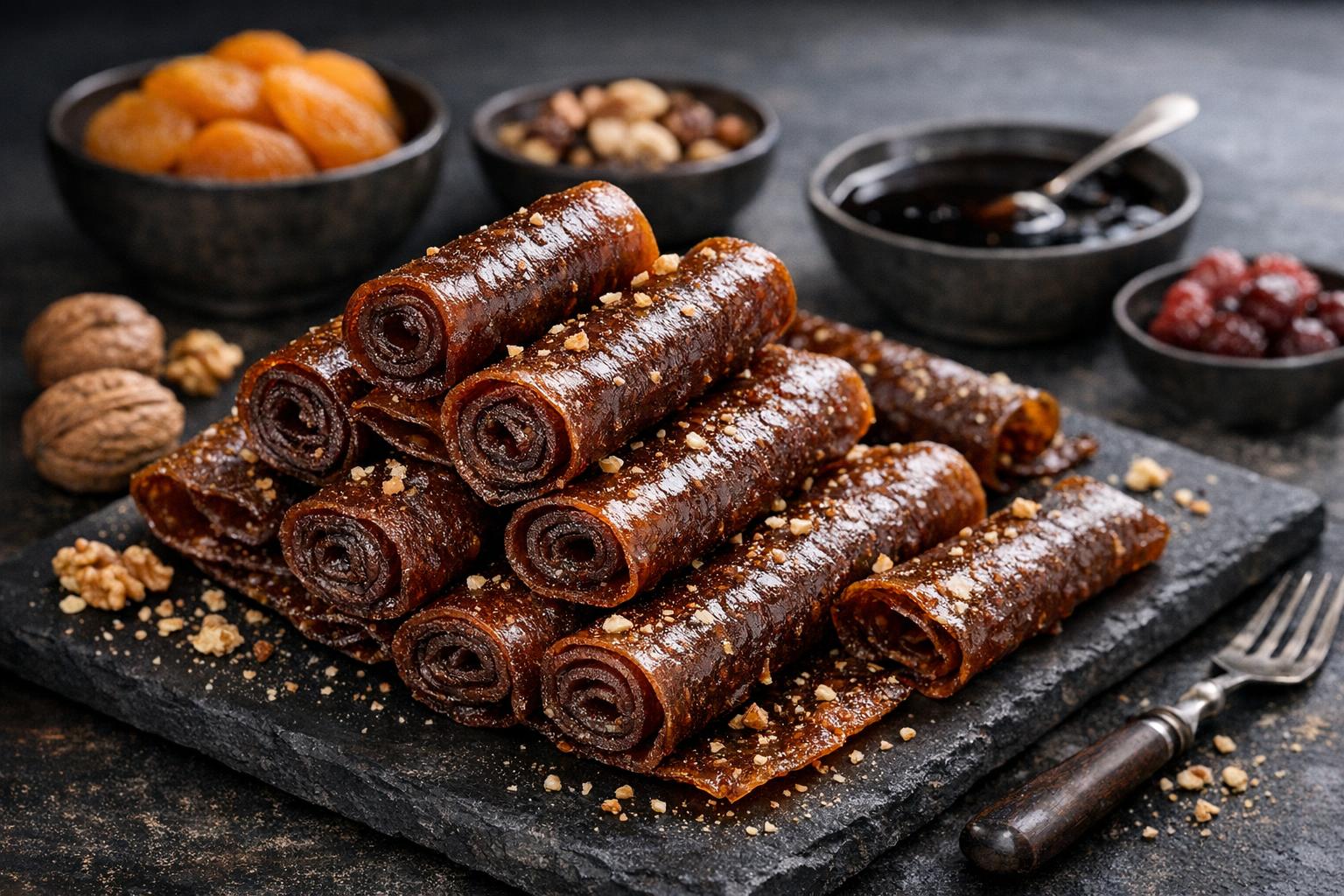
Traditional Turkish Fruit Leather (Pestil)
Pestil
Pestil is a naturally sweet, chewy fruit leather with an intense, concentrated flavor that melts on your tongue. These thin, translucent sheets have a beautiful amber color and glossy appearance. It's the perfect healthy snack that showcases Turkey's ancient fruit preservation techniques.
Ingredients
Instructions
-
Prepare the apricots
Wash the apricots thoroughly and remove the pits by cutting them in half. Place the apricot halves in a large pot with 100ml water. Cook over medium heat for 15-20 minutes until the apricots are completely soft and breaking apart. The mixture should look like chunky applesauce. Do not let it stick to the bottom of the pot.
-
Blend into puree
Remove the pot from heat and let cool for 5 minutes. Transfer the cooked apricots to a blender or use an immersion blender to create a completely smooth puree. The mixture should have no lumps and flow like thick cream. Do not over-blend as this can incorporate too much air.
-
Add sweetening ingredients
Return the puree to the pot and add sugar, lemon juice, and cornstarch. Whisk continuously over low heat for 8-10 minutes until the mixture thickens and the cornstarch is fully dissolved. The puree should coat the back of a spoon and have a glossy appearance. Do not use high heat as this will cause burning.
-
Spread for drying
Line a large baking sheet with parchment paper or a silicone mat. Pour the hot puree onto the prepared surface and spread it evenly using an offset spatula to create a thin layer about 3-4mm thick. The surface should be completely smooth and uniform. Do not make it too thick or it will not dry properly.
-
Begin drying process
Place the baking sheet in direct sunlight or in an oven set to its lowest temperature (50-60°C) with the door slightly open. Let dry for 12-24 hours until the surface is no longer sticky and peels away easily from the parchment. The pestil should feel leathery but flexible. Do not rush this process with high heat.
-
Cut and store
Carefully peel the dried pestil from the parchment paper and cut into strips or rectangles using kitchen scissors. Roll each piece in wax paper or store flat in airtight containers. The pestil should bend without cracking and have a glossy finish. Do not store in humid conditions as it will become sticky.



Leave a Comment