
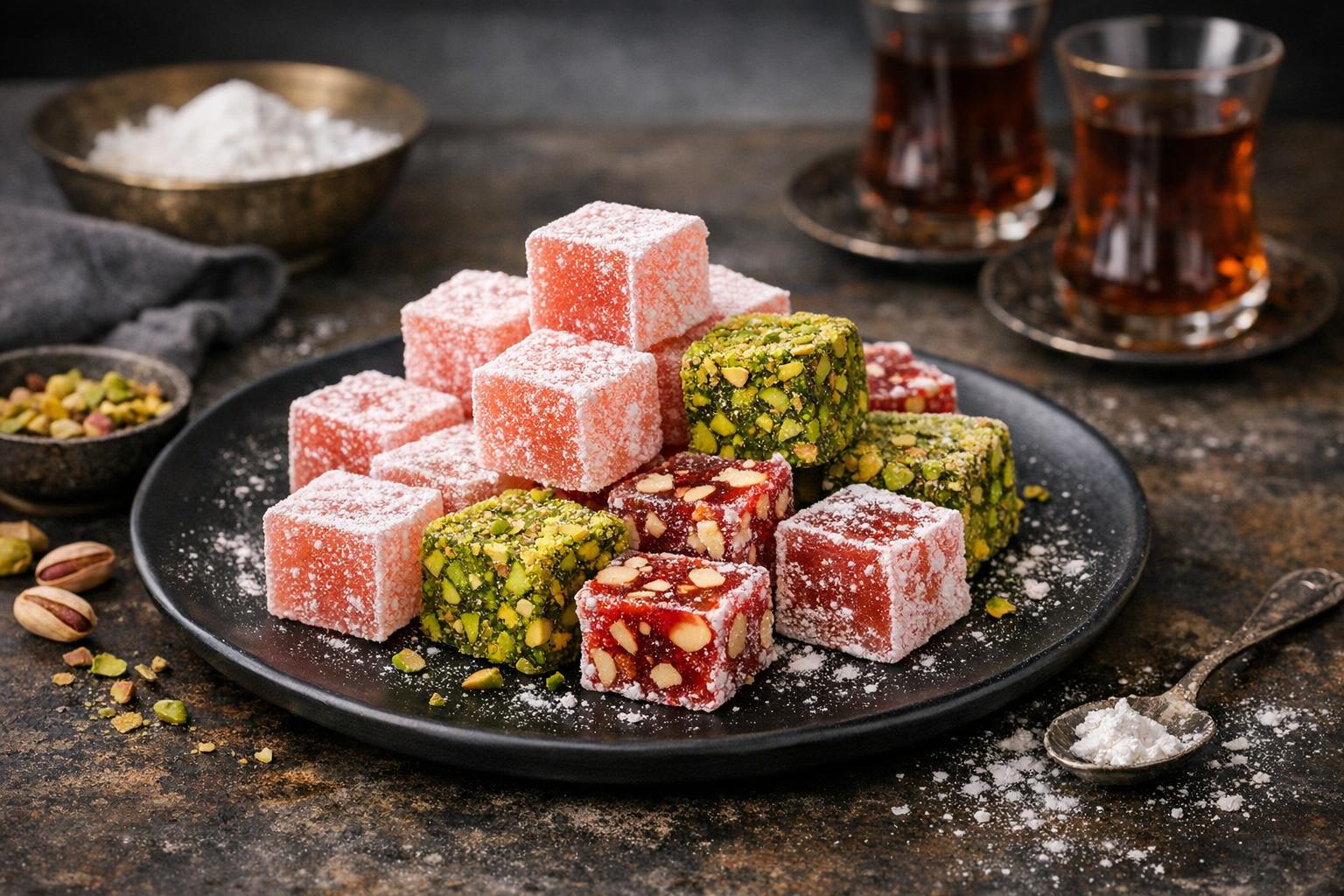
Turkish Delight - Traditional Rose and Lemon Lokum
Lokum
Turkish delight offers a delicate, perfumed sweetness with a soft, gel-like texture that melts on your tongue. These translucent cubes are dusted with powdered sugar and come in enchanting flavors like rose and lemon. This iconic confection makes an elegant gift or special treat that showcases the artistry of Ottoman confectionery.
Ingredients
Instructions
-
Prepare sugar syrup
Combine sugar and 450ml water in a heavy-bottomed saucepan. Heat over medium heat for 8-10 minutes, stirring until sugar completely dissolves. The syrup should be clear and bubble gently. Do not let it boil vigorously or the sugar may crystallize.
-
Make cornstarch mixture
Whisk cornstarch with remaining 300ml cold water and cream of tartar until completely smooth with no lumps. The mixture should flow easily like heavy cream. Do not skip the cream of tartar as it prevents crystallization.
-
Combine mixtures carefully
Slowly pour the cornstarch mixture into the hot sugar syrup while whisking constantly over medium heat for 2-3 minutes. The mixture will turn cloudy at first. Do not stop whisking or lumps will form.
-
Cook until thickened
Continue cooking over medium-low heat for 45-60 minutes, stirring frequently with a wooden spoon. The mixture should coat the spoon heavily and turn pale golden. Do not increase heat or the bottom will burn.
-
Add flavorings
Remove from heat and divide mixture into two bowls. Add rose water and red coloring to one bowl, lemon juice and yellow coloring to the other. Mix each for 1-2 minutes until evenly colored. Do not overmix or air bubbles will form.
-
Set in pans
Pour each mixture into separate 20x20cm pans dusted with cornstarch and powdered sugar mix. Spread evenly and let cool at room temperature for 4-6 hours until firm to touch. Do not refrigerate as this will make the texture too hard.
-
Cut and dust
Turn out onto cutting board and cut into 2cm cubes using a sharp knife. Toss pieces in remaining powdered sugar and cornstarch mixture for 2-3 minutes until completely coated. Do not press too hard when cutting or pieces will stick together.
Tips
Cooking Tips
Test doneness by dropping a small amount into cold water - it should hold its shape when pressed between your fingers. The mixture is ready when it pulls away from the pan sides easily.
Alternatives
Replace rose water with orange blossom water or vanilla extract for different flavors. Natural fruit juices work better than artificial extracts for authentic taste.
Serving & Storage
Serve in small paper cups with Turkish coffee or black tea. Store in airtight containers between parchment layers for up to 2 weeks at room temperature.


Leave a Comment