
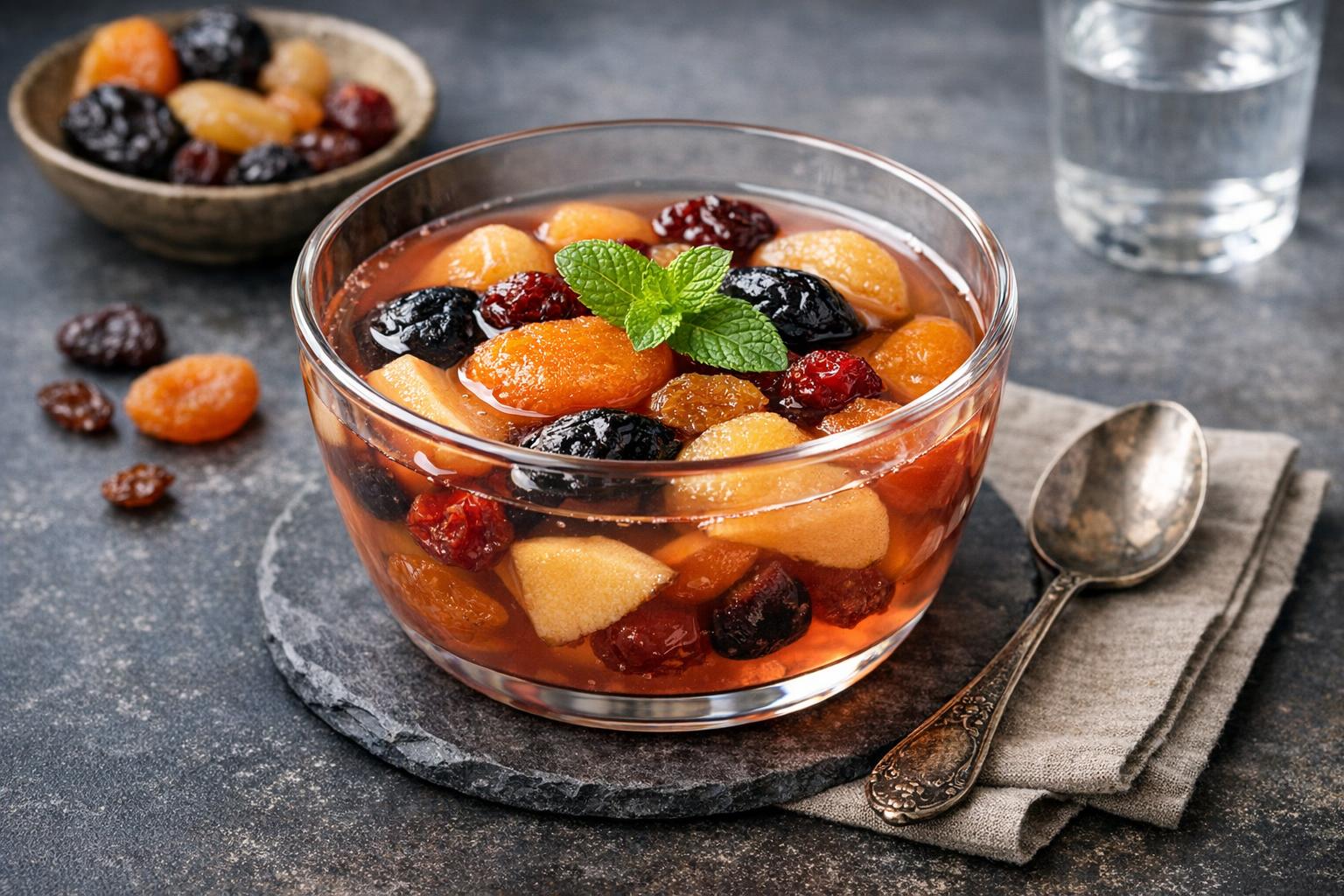
Turkish Dried Fruit Compote (Hoşaf)
Hoşaf
This fragrant Turkish compote combines dried apricots, figs, and prunes in a lightly sweetened syrup with warm spices. The tender fruits glisten in their amber-colored cooking liquid, creating an elegant dessert that's both refreshing and satisfying. It's the perfect make-ahead dessert that actually improves in flavor overnight.
Ingredients
Instructions
-
Prepare the fruits
Rinse the dried apricots, figs, and prunes under cold running water to remove any dust or debris. Pat them dry with a clean kitchen towel and place in a large bowl. Cover with warm water and let soak for 15-20 minutes until slightly softened. The fruits should feel less tough but still hold their shape. Do not oversoak as they will become mushy during cooking.
-
Start the syrup
Pour 1 liter of water into a large heavy-bottomed saucepan and add the sugar, cinnamon stick, and whole cloves. Heat over medium heat for 3-4 minutes, stirring occasionally until the sugar completely dissolves. The liquid should be clear with no sugar granules visible at the bottom. Do not boil at this stage as it will make the syrup cloudy.
-
Add the fruits
Drain the soaked fruits and add them to the saucepan with the warm syrup. Bring to a gentle boil over medium-high heat for 2-3 minutes, then immediately reduce to low heat. The surface should have gentle bubbles but not vigorous boiling. Do not cook on high heat as this will break down the fruits too quickly.
-
Simmer gently
Cover the saucepan and simmer on low heat for 25-30 minutes, stirring every 8-10 minutes to prevent sticking. The fruits should be tender when pierced with a fork and the syrup should have a light amber color. The liquid will reduce by about one-third during cooking. Do not lift the lid frequently as this releases steam and extends cooking time.
-
Add lemon juice
Remove the saucepan from heat and stir in the fresh lemon juice. Mix gently for 30 seconds to distribute evenly without breaking the fruits. The lemon juice will brighten the flavor and add a subtle tartness that balances the sweetness. Do not add lemon juice while cooking as the acid can make the fruits tough.
-
Cool and chill
Let the hoşaf cool to room temperature for 45-60 minutes, then transfer to the refrigerator. Chill for at least 3-4 hours or overnight until completely cold. The flavors will meld and intensify during chilling, and the syrup will thicken slightly. Do not serve warm as the full flavor profile develops only when chilled.
Tips
Cooking Tips
Use a heavy-bottomed pot to prevent scorching and stir gently to avoid breaking the delicate fruits. The syrup should barely simmer - vigorous boiling will make the fruits mushy and the syrup cloudy.
Alternatives
Replace prunes with dried pears or dates for different flavors, or add a few dried apples for extra variety. Honey can substitute sugar but use 25% less as it's sweeter and add it after removing from heat.
Serving & Storage
Serve chilled in small bowls with a drizzle of the cooking syrup and optionally garnish with chopped pistachios. Hoşaf keeps in the refrigerator for up to one week and actually improves in flavor after the first day.



Leave a Comment