
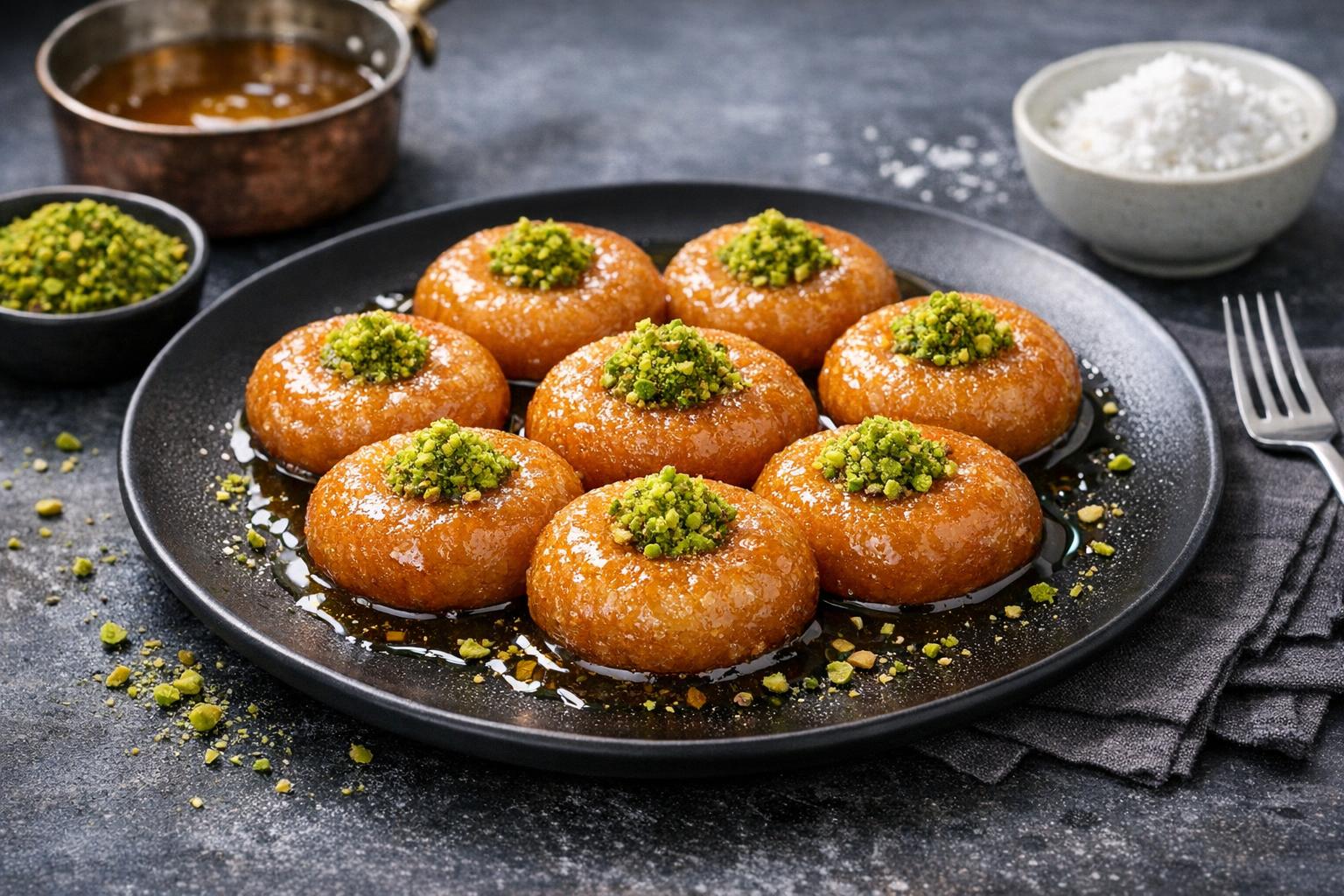
Turkish Lady's Navel Dessert - Hanım Göbeği
Hanım Göbeği
These delicate pastries taste like a perfect marriage of crispy exterior and soft, syrup-soaked interior with hints of lemon and vanilla. They look like elegant golden rosettes with a characteristic dimpled center that gives them their charming name. This traditional Ottoman dessert is surprisingly achievable at home and makes an impressive finale to any Turkish meal.
Ingredients
Instructions
-
Make the syrup
Combine sugar, water, lemon juice, and vanilla extract in a medium saucepan. Bring to a boil over medium-high heat for 2-3 minutes, then reduce to low heat and simmer for 8-10 minutes until slightly thickened and coats the back of a spoon. Do not let it caramelize or turn golden.
-
Prepare the dough
Melt butter in a small saucepan over low heat for 2-3 minutes until completely liquid. In a large bowl, whisk eggs thoroughly, then gradually add warm milk, melted butter, and salt. Slowly incorporate flour while mixing for 4-5 minutes until you have a smooth, elastic dough that pulls away from the bowl sides. Do not overmix or the dough will become tough.
-
Rest the dough
Cover the dough with a damp kitchen towel and let it rest at room temperature for 30-40 minutes until it becomes more pliable and slightly sticky to touch. The dough should feel relaxed and easy to stretch. Do not skip this resting period or the pastries will be difficult to shape.
-
Heat the oil
Heat vegetable oil in a deep, heavy-bottomed pot over medium heat for 5-7 minutes until it reaches 170°C (340°F). Test with a small piece of dough - it should sizzle immediately and rise to the surface within 2-3 seconds. Do not let the oil get too hot or the pastries will burn before cooking through.
-
Shape the pastries
Pinch off walnut-sized pieces of dough and roll each into a smooth ball. Flatten each ball into a thin circle about 8cm wide, then use your thumb to create a deep dimple in the center, creating the characteristic navel shape. The edges should be slightly thicker than the center. Do not make the pastries too thin or they will fall apart during frying.
-
Fry the pastries
Carefully slide 3-4 pastries into the hot oil using a slotted spoon. Fry over medium heat for 3-4 minutes on the first side until golden brown, then flip and fry for another 2-3 minutes until evenly golden and crispy. They should puff up and sound hollow when tapped. Do not overcrowd the pot or the temperature will drop too much.
-
Soak in syrup
Immediately transfer the hot, fried pastries into the warm syrup using a slotted spoon. Let them soak for 10-15 minutes, turning once halfway through until they absorb most of the syrup and feel heavy and saturated. The syrup should be warm, not hot. Do not leave them in cold syrup or they will not absorb properly.

Leave a Comment