
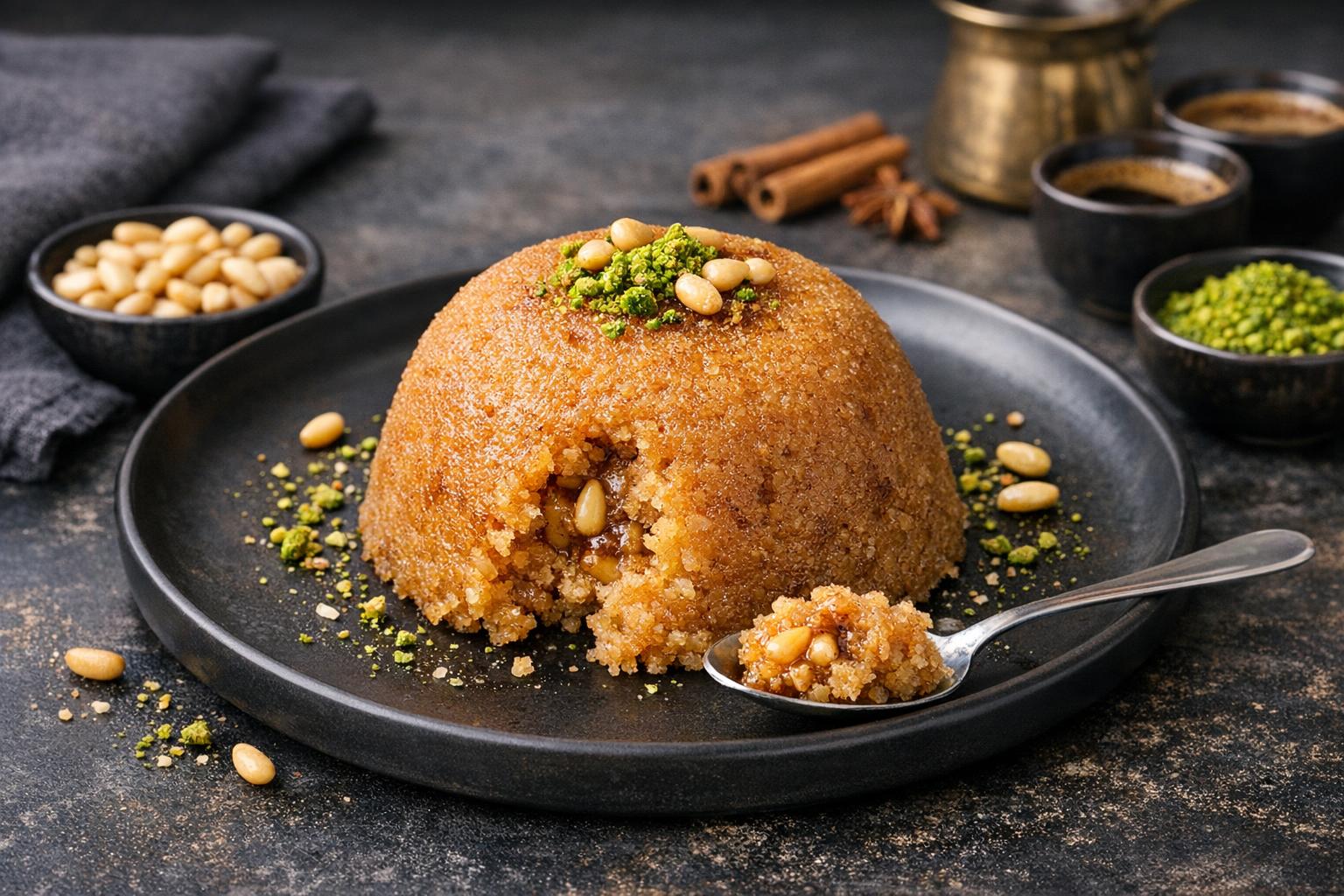
Turkish Semolina Halva
İrmik Helvası
This golden, nutty dessert has a rich, buttery flavor with hints of vanilla and a soft, pudding-like texture that melts in your mouth. The semolina creates beautiful golden swirls when cooked, giving it an elegant appearance that's perfect for special occasions. It's surprisingly easy to make and delivers the authentic taste of Turkish hospitality in every spoonful.
Ingredients
Instructions
-
Toast the semolina
Melt butter in a heavy-bottomed saucepan over medium-low heat for 2-3 minutes until completely melted and foaming. Add semolina and stir constantly with a wooden spoon for 15-20 minutes until it turns golden brown and releases a nutty aroma. Do not let it burn or stick to the bottom.
-
Prepare milk mixture
While toasting semolina, heat milk and water together in a separate saucepan over medium heat for 3-4 minutes until it just begins to steam but not boil. Keep this mixture warm on low heat. Do not let it come to a full boil as it may curdle.
-
Add hot liquid
Very slowly pour the hot milk mixture into the toasted semolina over medium-low heat, stirring continuously for 2-3 minutes. The mixture will bubble vigorously at first, then become smooth and creamy. Do not add the liquid too quickly or lumps will form.
-
Add sugar
Add sugar, vanilla extract, and salt to the mixture. Continue stirring over medium-low heat for 8-10 minutes until the sugar dissolves completely and the mixture thickens to a pudding-like consistency that coats the spoon. Do not let it become too thick or it will be difficult to serve.
-
Final cooking
Reduce heat to low and cook for another 5-7 minutes, stirring occasionally, until the halva pulls away from the sides of the pan and has a smooth, glossy appearance. The consistency should be creamy but hold its shape when spooned. Do not overcook or it will become rubbery.
-
Serve and garnish
Remove from heat and let cool for 2-3 minutes. Spoon into individual serving bowls while still warm and sprinkle with chopped pistachios. The halva should be warm and creamy when served. Do not let it cool completely before serving as it will become too firm.
Tips
Cooking Tips
The key to smooth halva is maintaining consistent medium-low heat and stirring constantly. If lumps form, press them against the side of the pan with your spoon while stirring to break them up before they set.
Alternatives
You can replace pistachios with chopped walnuts, almonds, or toasted pine nuts. For a richer flavor, substitute half the butter with ghee, which will give the halva a deeper, more authentic taste.
Serving & Storage
Serve warm in small portions as it's quite rich. Leftover halva can be stored in the refrigerator for up to 3 days and gently reheated with a splash of milk. Traditionally served alongside Turkish tea or coffee.

Leave a Comment