
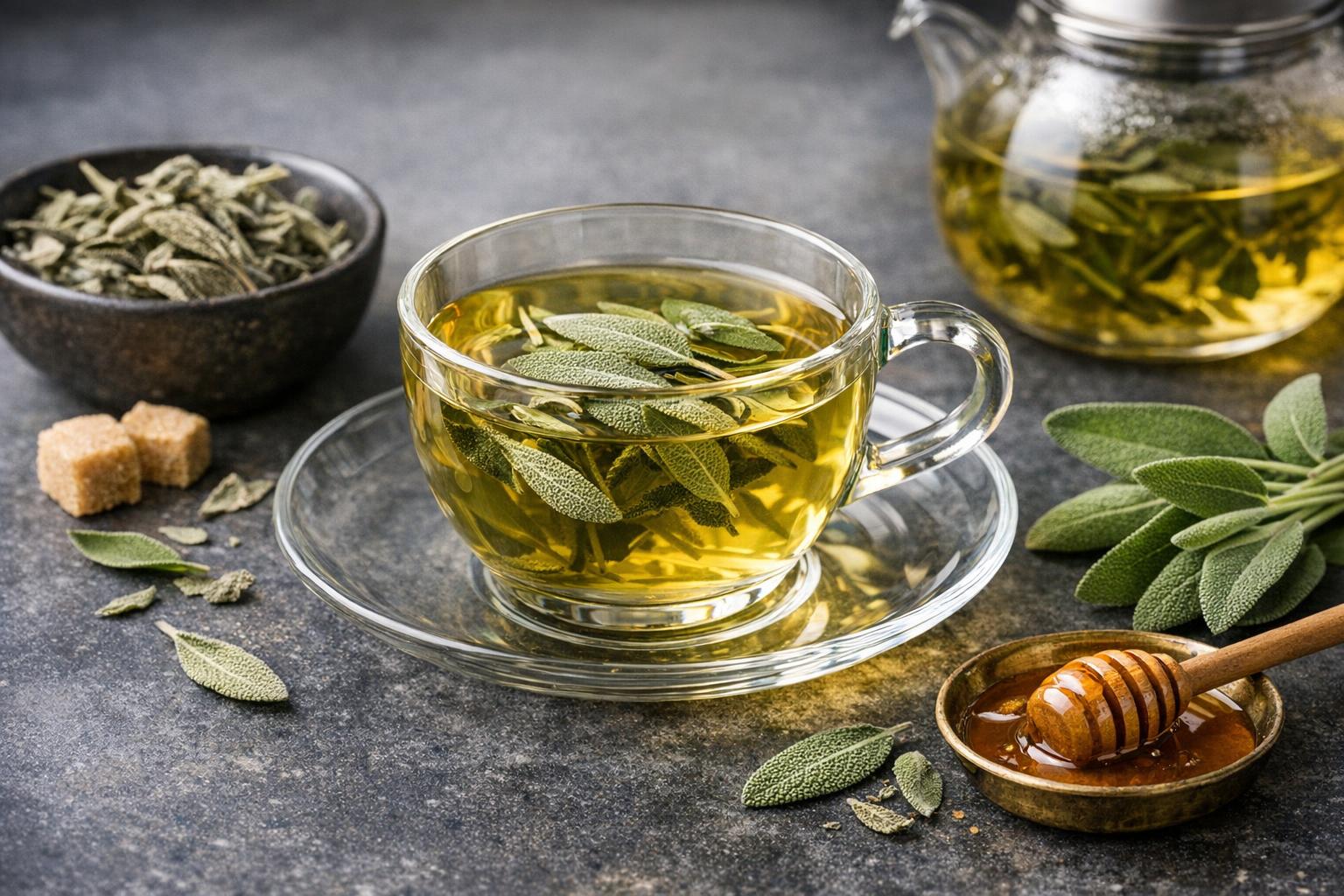
Turkish Sage Tea
Adaçayı Çayı
This aromatic herbal tea has a warm, earthy flavor with subtle pine notes and a slightly bitter finish. The golden-amber brew releases a soothing, woodsy fragrance that fills the entire room. This traditional Turkish remedy is perfect for cold evenings or when you need natural digestive support.
Ingredients
Instructions
-
Heat the water
Pour 500ml cold water into a small saucepan. Heat over medium-high heat for 4-5 minutes until the water reaches a rolling boil with large bubbles breaking the surface. Do not let it boil too vigorously as this can make the tea bitter.
-
Add sage leaves
Remove the saucepan from heat and immediately add 2 tbsp dried sage leaves to the hot water. Stir gently with a wooden spoon for 10 seconds to ensure all leaves are submerged. Do not crush or press the leaves as this releases too much bitterness.
-
Steep the tea
Cover the saucepan with a lid and let the sage steep for 8-10 minutes off the heat. The water should turn golden-amber and release a strong woody aroma. Do not steep longer than 12 minutes or the tea will become overly bitter and astringent.
-
Strain the tea
Place a fine mesh strainer over a teapot or serving vessel. Pour the tea through the strainer over medium speed to catch all sage particles. Press the leaves gently with a spoon to extract remaining liquid. Do not squeeze too hard as this adds unwanted bitterness.
-
Add sweeteners
Stir in 1 tbsp honey and 1 tsp fresh lemon juice while the tea is still hot over low heat for 30 seconds until honey completely dissolves. Taste and adjust sweetness as needed. Do not add lemon if the tea tastes too sharp already.
-
Serve immediately
Pour the hot tea into small Turkish tea glasses or cups, filling each about three-quarters full. Serve within 2-3 minutes while the aroma is strongest and temperature is optimal. Do not let the tea cool completely as it loses its therapeutic warmth.
Tips
Cooking Tips
Use a 1:4 ratio of sage to water for the perfect strength - too much sage creates an overpowering medicinal taste while too little won't provide the full aromatic benefit.
Alternatives
Fresh sage leaves can replace dried ones using 3 tbsp fresh for every 2 tbsp dried, though the flavor will be milder and more grassy than the concentrated dried version.
Serving & Storage
Serve in traditional small Turkish tea glasses with a small spoon for stirring honey. Leftover tea can be refrigerated for 2 days and reheated gently, though it's best consumed fresh for maximum therapeutic benefits.


Leave a Comment