
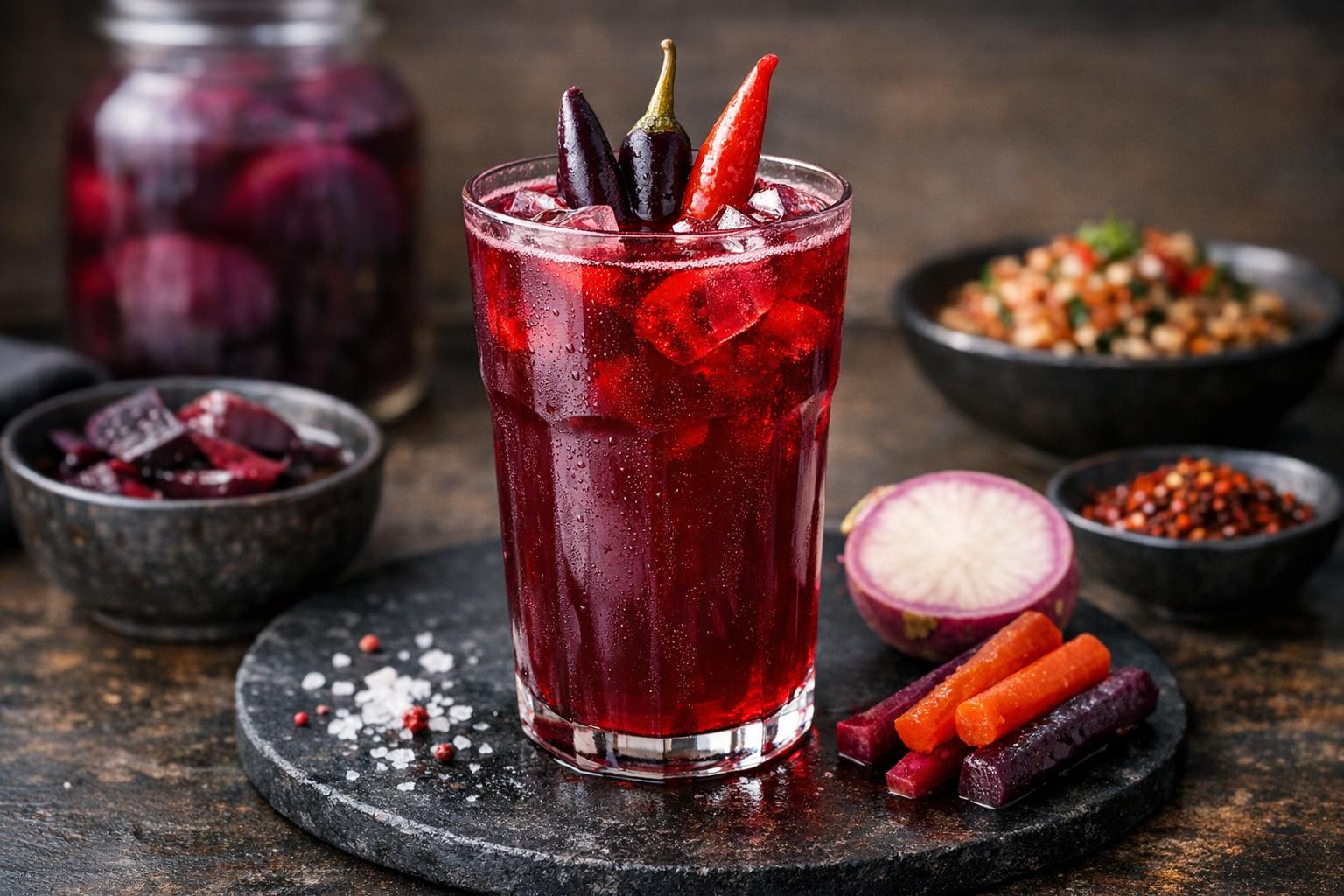
Turkish Turnip Juice - Fermented Spicy Purple Drink
Şalgam
This tangy, spicy fermented turnip juice delivers a bold sour kick with hints of garlic and chili heat. The striking purple-red color comes from natural fermentation, creating an eye-catching drink. It's the perfect palate cleanser that awakens your taste buds with its unique probiotic punch.
Ingredients
Instructions
-
Prepare vegetables
Wash and peel turnips and carrots thoroughly. Cut turnips into large chunks about 3cm pieces and slice carrots into thick rounds. Place vegetables in a large, clean glass jar or food-grade plastic container. Do not use metal containers as they can interfere with fermentation.
-
Add aromatics
Peel garlic cloves and add them whole to the container. Break dried chili peppers in half and remove stems, then add to vegetables. Sprinkle bulgur evenly over the vegetables - this will help feed the fermentation process. Do not crush or chop the garlic too finely as it may become overpowering.
-
Create brine
Dissolve salt completely in room temperature water by stirring for 2-3 minutes until no granules remain. Pour the salt water over vegetables until they are completely submerged by at least 2cm. The vegetables must stay under the brine to prevent mold growth.
-
Begin fermentation
Cover container with a clean cloth or loose lid to allow gases to escape while keeping dust out. Place in a cool, dark place at room temperature (18-22°C) for 5-7 days. Check daily to ensure vegetables remain submerged and skim off any foam that forms on surface. Do not seal tightly as gases need to escape.
-
Monitor progress
After 3 days, taste the liquid - it should start developing tanginess and the color should begin turning pink-purple. Continue fermenting for 2-4 more days until desired sourness is reached and liquid turns deep purple-red. The longer it ferments, the more sour it becomes.
-
Strain and chill
Strain the liquid through a fine mesh strainer, pressing vegetables gently to extract maximum flavor. Pour into clean glass bottles and refrigerate immediately for at least 4 hours before serving. The cold temperature will slow fermentation and develop the best flavor. Do not store at room temperature once strained.
Tips
Alternatives
If purple turnips aren't available, use regular white turnips with a small piece of red cabbage for color - the flavor will be slightly milder but still authentic.
Serving & Storage
Serve ice-cold in small glasses alongside grilled meats or kebabs. Store refrigerated for up to 2 weeks - the flavor will continue to develop and can be diluted with water if it becomes too strong.


Leave a Comment