
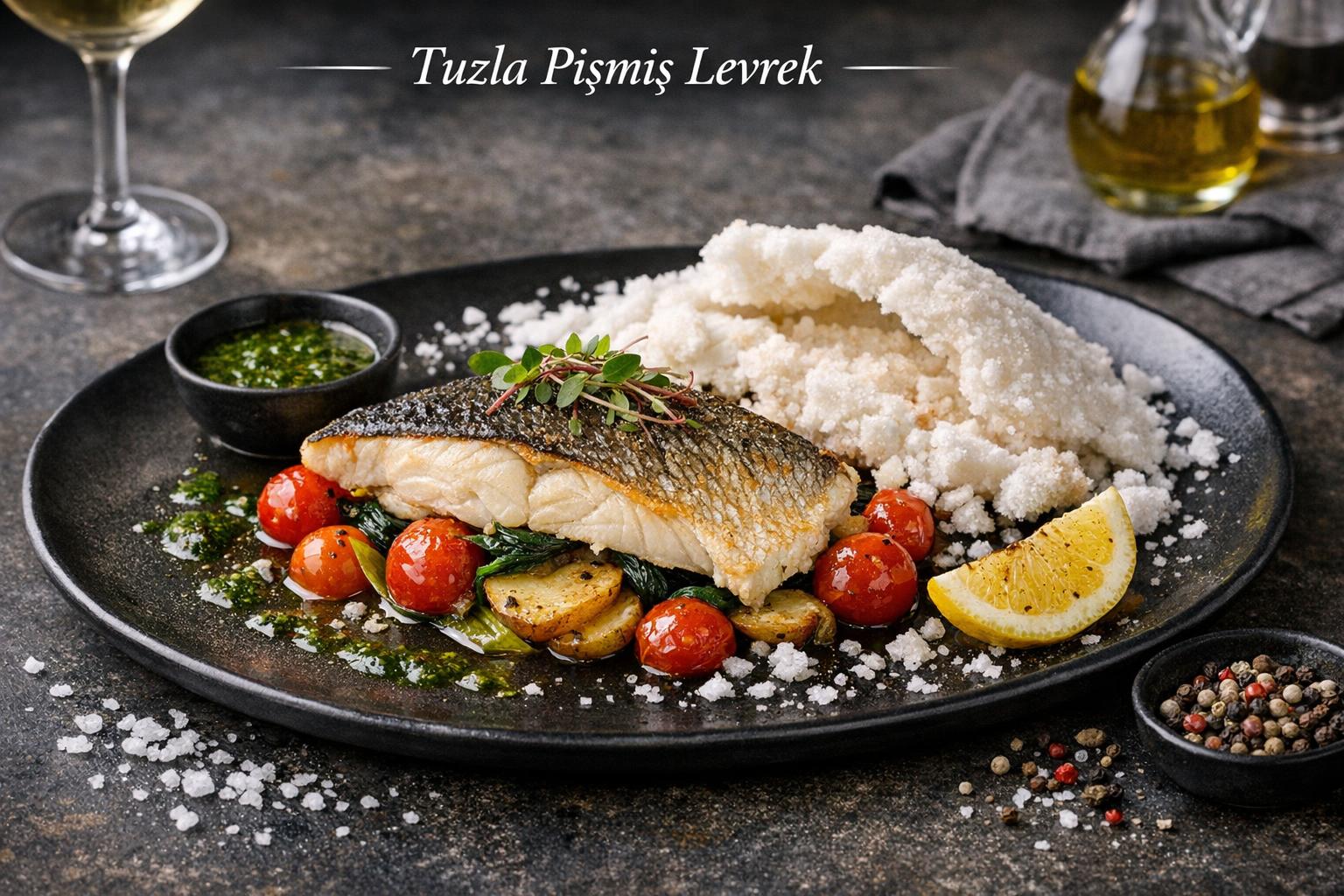
Sea Bass in Salt Crust
Tuzla Pişmiş Levrek
This elegant dish produces incredibly moist, flaky fish with a delicate, pure flavor enhanced by aromatic herbs. The dramatic salt crust creates a beautiful presentation when cracked open at the table. It's a sophisticated yet simple cooking method that guarantees perfectly cooked fish every time.
Ingredients
Instructions
-
Prepare the fish
Clean and scale the sea bass if not already done, leaving it whole with head and tail intact. Pat completely dry with paper towels and brush skin lightly with olive oil. Stuff the cavity with half the fresh herbs, 4 bay leaves, and lemon slices. Season the cavity with black pepper for 5 minutes. Do not oversalt as the crust will provide seasoning.
-
Make salt mixture
Preheat oven to 200°C. In a large bowl, whisk egg whites until slightly frothy for 2-3 minutes. Add coarse sea salt and remaining herbs, mixing until the mixture feels like wet sand and holds together when squeezed. The mixture should be moist but not soggy. Do not add water or it will become too sticky.
-
Create base layer
Line a large baking tray with parchment paper. Spread one-third of the salt mixture on the tray in the shape of the fish, about 2cm thick. Press down gently with your hands to create an even base layer. The base should extend 5cm beyond the fish outline. Do not make it too thin or the fish will stick to the pan.
-
Encase the fish
Place the stuffed sea bass on the salt base. Cover completely with remaining salt mixture, pressing gently to seal edges and eliminate air pockets. The fish should be buried under 2-3cm of salt on all sides. Smooth the surface with wet hands for an even finish. Do not leave any fish exposed or it will dry out.
-
Bake until set
Bake in preheated oven for 35-40 minutes until the salt crust is golden brown and sounds hollow when tapped. The crust should be completely hard and set throughout. Insert a skewer through the thickest part - it should go through easily when done. Do not overbake or the fish will become dry inside the crust.
-
Rest and crack
Remove from oven and let rest for 5 minutes to allow juices to redistribute. Crack open the salt crust carefully with a knife and spoon, peeling away pieces to reveal the fish. The skin should peel away with the salt, leaving clean fish fillets. Do not let the fish sit too long in the hot crust or it will continue cooking.
Tips
Cooking Tips
Test doneness by inserting a metal skewer into the thickest part of the fish through the crust - if it goes in easily and comes out warm, the fish is perfectly cooked inside.
Alternatives
If sea bass isn't available, whole sea bream, red snapper, or any firm white fish works well, adjusting cooking time based on thickness.
Serving & Storage
Serve immediately after cracking open the crust with lemon wedges, olive oil, and simple roasted vegetables. This dish is best enjoyed fresh and doesn't reheat well due to the delicate texture of the fish.



Leave a Comment