
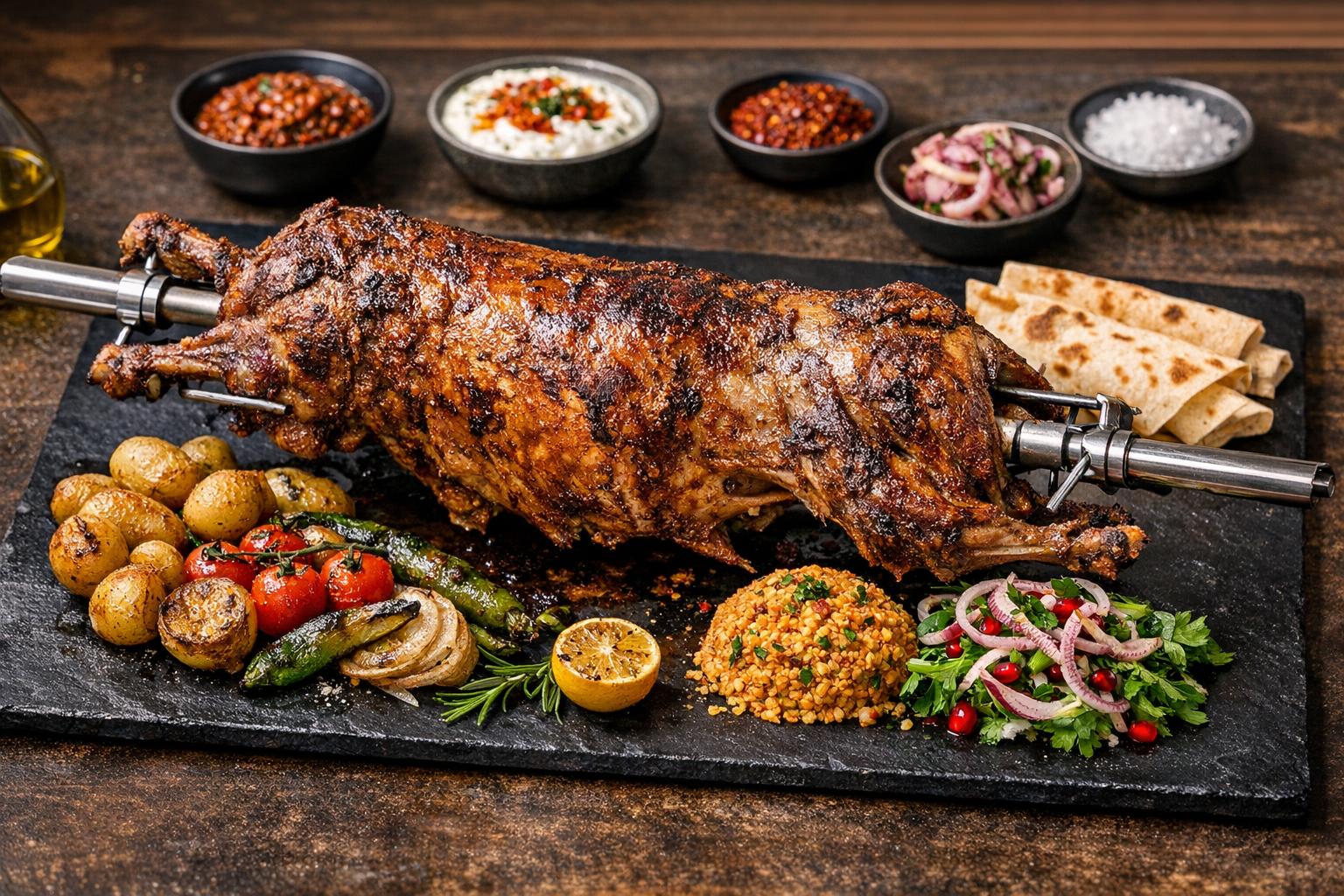
Traditional Turkish Çevirme Lamb - Slow-Roasted Leg of Lamb
Çevirme Kuzu
This spectacular slow-roasted lamb delivers incredibly tender, juicy meat with a golden, crispy exterior and aromatic herbs. The whole leg emerges beautifully bronzed and glistening, creating an impressive centerpiece. Perfect for special gatherings when you want to create unforgettable memories with authentic Turkish flavors.
Ingredients
Instructions
-
Prepare the lamb
Remove the lamb from refrigerator 1 hour before cooking to bring to room temperature. Pat completely dry with paper towels and score the fat in a diamond pattern about 5mm deep. Mince 6 garlic cloves finely and mix with 4 tbsp olive oil, rosemary, thyme, salt and pepper to create a paste. Do not skip the scoring as it prevents the meat from curling during cooking.
-
Season and rest
Rub the herb paste all over the lamb, working it into the scores and coating every surface completely. Place on a roasting rack and let rest at room temperature for 30-45 minutes until the surface feels slightly tacky. The meat should no longer feel cold to touch. Do not rush this step as proper seasoning time is crucial for flavor penetration.
-
Prepare vegetables
Preheat oven to 220°C. Slice onions into thick wedges and cut carrots and potatoes into large chunks about 4cm pieces. Toss vegetables with remaining olive oil, salt, pepper, and sliced garlic cloves. Arrange in the bottom of a large roasting pan. Do not cut vegetables too small or they will burn during the long cooking time.
-
Initial high heat sear
Place the lamb fat-side up on the vegetables in the roasting pan. Roast at 220°C for 20-25 minutes until the surface is golden brown and sizzling. The fat should be starting to render and the kitchen should smell aromatic. Do not open the oven door during this crucial browning phase.
-
Add liquid and reduce heat
Remove pan from oven and carefully add tomato paste around the vegetables, then pour in the beef broth. Reduce oven temperature to 160°C and return the lamb. The liquid should not touch the meat directly. Do not pour liquid over the lamb as it will wash away the seasoned crust.
-
Slow roast to perfection
Continue roasting at 160°C for 2.5-3 hours, basting every 45 minutes with pan juices. The internal temperature should reach 60°C for medium-rare or 65°C for medium. The meat should feel tender when pressed and the juices should run pink. Do not overcook as the lamb will become dry and tough.
-
Rest before carving
Remove from oven and tent loosely with foil. Let rest for 20-30 minutes before carving to allow juices to redistribute. The meat should feel firm but yielding when gently pressed. Strain the pan juices through a fine sieve for serving as gravy. Do not skip resting time or the juices will run out when carved.
Tips
Cooking Tips
Use a meat thermometer inserted into the thickest part of the leg, avoiding bone contact. Baste regularly with accumulated pan juices to keep the surface moist and develop deeper flavor. If the surface browns too quickly, cover loosely with foil.
Alternatives
Lamb shoulder can substitute for leg but requires 30-45 minutes less cooking time due to higher fat content. Fresh oregano works beautifully instead of thyme, giving a more Mediterranean flavor profile.
Serving & Storage
Traditionally served with rice pilaf, grilled vegetables, and warm pita bread alongside Turkish red wine. Leftover lamb keeps refrigerated for 3 days and makes excellent sandwiches or can be diced for pilaf dishes.
Leave a Comment