
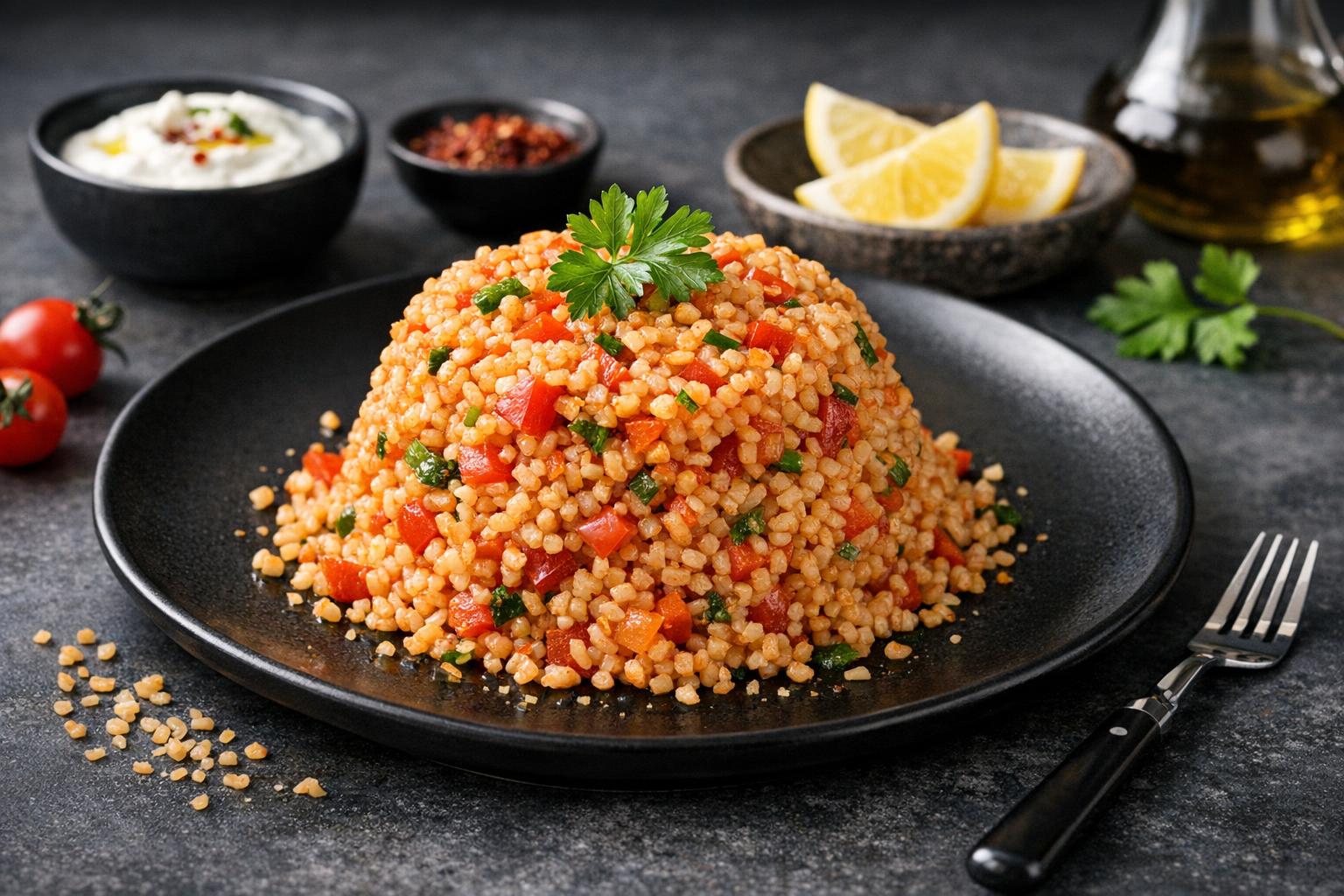
Turkish Bulgur Pilaf
Bulgur Pilavı
This nutty, fluffy bulgur pilaf has a rich, earthy flavor with hints of butter and onion that meld beautifully together. The grains are perfectly separate and golden, creating an appealing rustic appearance. It's the perfect wholesome side dish that transforms any meal into something satisfying and comforting.
Ingredients
Instructions
-
Prepare the onion
Finely dice the onion into small 5mm pieces. Heat the butter in a heavy-bottomed saucepan over medium heat for 1-2 minutes until melted and fragrant. Add the diced onion and cook for 5-6 minutes until soft and translucent. Do not let the onion brown or caramelize as this will overpower the delicate bulgur flavor.
-
Add tomato paste
Stir in the tomato paste with the softened onion over medium heat for 1-2 minutes until the paste darkens slightly and becomes fragrant. The mixture should sizzle gently and the paste should lose its raw smell. Do not cook too long or the paste will become bitter and stick to the pan.
-
Toast the bulgur
Add the bulgur to the pan and stir constantly over medium heat for 3-4 minutes until the grains are well coated with the butter mixture and lightly toasted. The bulgur should smell nutty and some grains may turn golden. Do not let the bulgur burn or stick to the bottom of the pan.
-
Add liquid and seasonings
Pour in the chicken broth, add salt and black pepper, then bring to a boil over high heat for 2-3 minutes until bubbling vigorously. The liquid should cover the bulgur by about 1 inch. Do not skip the boiling step as this ensures proper grain expansion.
-
Simmer covered
Reduce heat to low, cover tightly with a lid, and simmer for 15-18 minutes until the liquid is completely absorbed. The surface should show small holes where steam escapes and no liquid should remain. Do not lift the lid during cooking as this releases essential steam.
-
Rest and fluff
Remove from heat and let stand covered for 10 minutes to allow the bulgur to steam and finish cooking. Fluff gently with a fork, separating the grains. The pilaf should be tender with distinct, separate grains. Do not stir vigorously or the grains will become mushy.
Tips
Cooking Tips
Toast the bulgur until it smells nutty but not burned - this creates the signature deep flavor. Use a heavy-bottomed pan to prevent sticking and ensure even heat distribution.
Alternatives
Vegetable broth works perfectly for a vegetarian version, while beef broth creates a richer flavor. Fine bulgur can be used but reduce cooking time to 12-15 minutes.
Serving & Storage
Serve alongside grilled meats, stews, or roasted vegetables. Store leftovers in the refrigerator for up to 3 days and reheat gently with a splash of broth to restore moisture.


Leave a Comment