
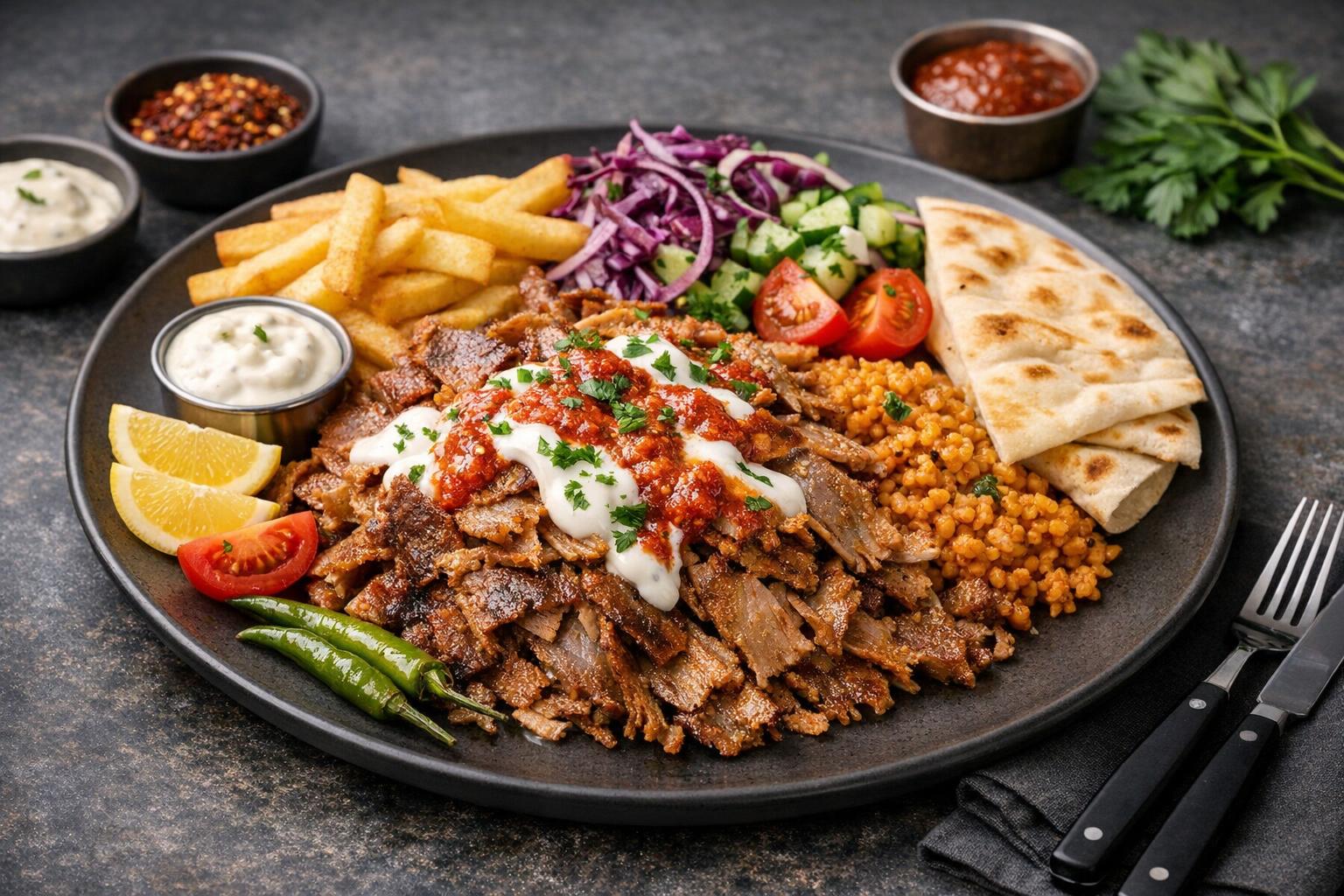
Turkish Döner Kebab
Döner Kebabı
Tender, spiced lamb and beef slowly roasted on a vertical spit creates juicy, flavorful meat with crispy edges. The golden-brown exterior gives way to succulent layers of perfectly seasoned meat. This iconic Turkish street food delivers an unforgettable combination of smoky flavors and satisfying textures in every bite.
Ingredients
Instructions
-
Prepare the meat
Cut both lamb shoulder and beef chuck into thin slices, about 3mm thick, cutting against the grain. Arrange the slices in overlapping layers on a large plate. The meat should be uniformly thin for even cooking and marinating. Do not cut too thick or the marinade won't penetrate properly.
-
Make spice marinade
Finely grate the onion and garlic into a large bowl. Add yogurt, olive oil, cumin, paprika, oregano, coriander, salt, and black pepper. Mix thoroughly for 2-3 minutes until the marinade is completely smooth and well combined. The mixture should be creamy and aromatic. Do not skip the grating step as it releases more flavor than chopping.
-
Marinate the meat
Coat each meat slice completely with the marinade, massaging it in with your hands. Layer the marinated meat in a deep dish, ensuring each piece is well-coated. Cover tightly and refrigerate for minimum 4 hours or overnight. The meat should absorb the marinade and become darker in color. Do not marinate for less than 4 hours or the flavors won't develop properly.
-
Preheat and prepare
Preheat oven to 220°C (200°C fan). Line a large baking sheet with parchment paper and lightly oil it. Remove meat from refrigerator 30 minutes before cooking to bring to room temperature. The oven should be fully heated before adding the meat. Do not use a cold oven as this will result in tough, dry meat.
-
Arrange meat layers
Layer the marinated meat slices on the prepared baking sheet, slightly overlapping each piece to create a thick, even layer about 3cm high. Press down gently to compact the layers. The surface should be relatively flat and uniform. Do not spread too thin or the meat will dry out during cooking.
-
First roasting phase
Roast on high heat at 220°C for 25-30 minutes until the top is golden brown and slightly crispy around the edges. The surface should sizzle and develop a beautiful caramelized color. Do not open the oven door frequently as this will lower the temperature and prevent proper browning.
-
Reduce and continue
Reduce temperature to 180°C and continue cooking for 15-20 minutes until the meat is cooked through but still juicy inside. The internal temperature should reach 70°C when tested with a thermometer. The meat should be firm but not dry. Do not overcook or the döner will become tough and lose its characteristic tenderness.
-
Rest and slice
Remove from oven and let rest for 5 minutes to allow juices to redistribute. Using a sharp knife, slice the döner into thin strips, cutting from top to bottom to get the layered effect. The slices should hold together but be easy to separate. Do not slice immediately after cooking or you'll lose the precious juices.
Tips
Cooking Tips
For the most authentic flavor, add a small piece of lamb fat between the meat layers before cooking - this keeps the döner moist and adds traditional richness that commercial döner shops use.
Alternatives
If you can't find lamb shoulder, use all beef chuck roast or substitute with chicken thighs for a lighter version - just reduce cooking time by 10 minutes for poultry.
Serving & Storage
Serve immediately in warm pide bread with sliced tomatoes, onions, lettuce, and garlic yogurt sauce. Leftover döner keeps for 3 days refrigerated and reheats well in a hot pan with a splash of water.
Leave a Comment