
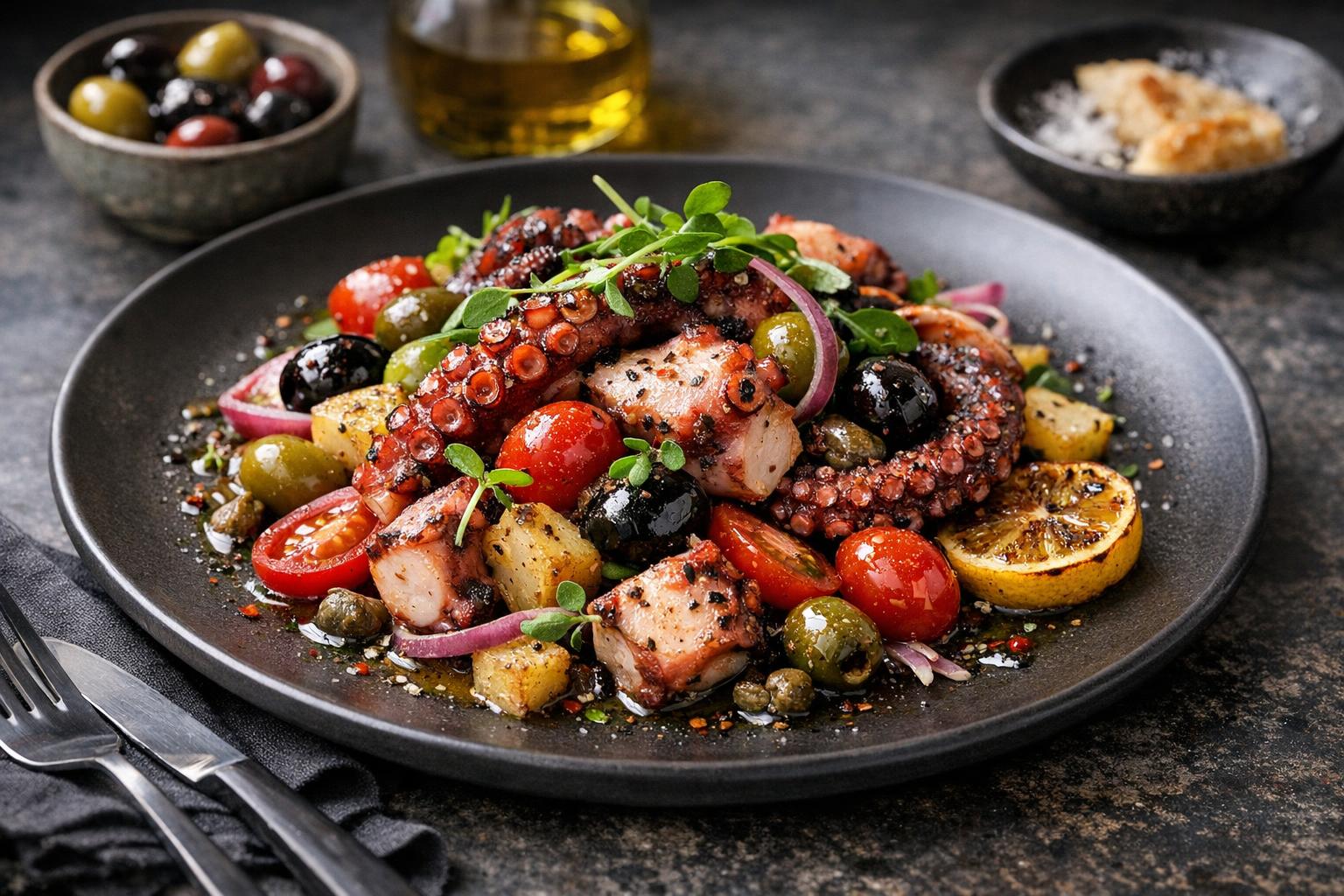
Turkish Octopus with Olives
Zeytinli Ahtapot
This Mediterranean-inspired dish features tender octopus braised with aromatic herbs and briny olives, creating a rich, savory flavor profile. The octopus becomes melt-in-your-mouth tender while the olives add bursts of salty intensity. It's an elegant dish perfect for impressing guests or enjoying a special coastal Turkish meal.
Ingredients
Instructions
-
Prepare the octopus
Clean the octopus thoroughly under cold running water, removing any sand or debris. Cut off the head and remove the beak from the center. Slice the tentacles into 5cm pieces. Place in a large pot with salted water and bring to a boil over high heat for 2-3 minutes until the tentacles curl. Do not overcook or the octopus will become rubbery.
-
Drain and cool
Drain the octopus pieces immediately and rinse with cold water for 1-2 minutes until cooled. Pat completely dry with paper towels. The octopus should feel firm but not tough. Do not skip the drying step or excess water will prevent proper browning.
-
Sear the octopus
Heat 3 tbsp olive oil in a heavy-bottomed pot over medium-high heat for 2 minutes. Add octopus pieces and sear for 4-5 minutes per side until golden brown and slightly caramelized. The octopus should develop a beautiful golden crust. Do not move the pieces too early or they won't brown properly.
-
Sauté aromatics
Reduce heat to medium and add diced onion to the same pot. Cook for 5-6 minutes until softened and translucent. Add minced garlic and cook for 1 minute until fragrant. The onions should be golden but not browned. Do not let the garlic burn or it will become bitter.
-
Build the sauce
Stir in tomato paste and cook over medium heat for 2 minutes until it darkens slightly. Add red wine and scrape up any browned bits from the bottom. Add bay leaves, thyme, and remaining olive oil. The mixture should be aromatic and well combined. Do not let the wine completely evaporate.
-
Add olives and braise
Return octopus to the pot and add green olives. Reduce heat to low, cover, and simmer for 45-50 minutes until octopus is fork-tender. Check every 15 minutes and add water if needed. The octopus should be extremely tender when pierced with a fork. Do not cook on high heat or the octopus will become tough.
-
Finish and serve
Remove from heat and discard bay leaves. Squeeze fresh lemon juice over the dish and season with salt and black pepper to taste. Let rest for 5 minutes before serving. The sauce should coat the octopus nicely. Do not add lemon juice while cooking or it may make the octopus tough.
Tips
Cooking Tips
To ensure tender octopus, freeze it overnight before cooking - this breaks down the muscle fibers. Alternatively, add a wine cork to the cooking water during the initial blanching for traditional tenderizing.
Alternatives
Kalamata olives can replace green olives for a more intense flavor, while white wine works instead of red wine for a lighter taste. Dried oregano can substitute fresh thyme if needed.
Serving & Storage
Serve warm with crusty bread and a drizzle of good olive oil. Store leftovers in the refrigerator for up to 3 days - the flavors actually improve overnight. Reheat gently to avoid toughening the octopus.


Leave a Comment