
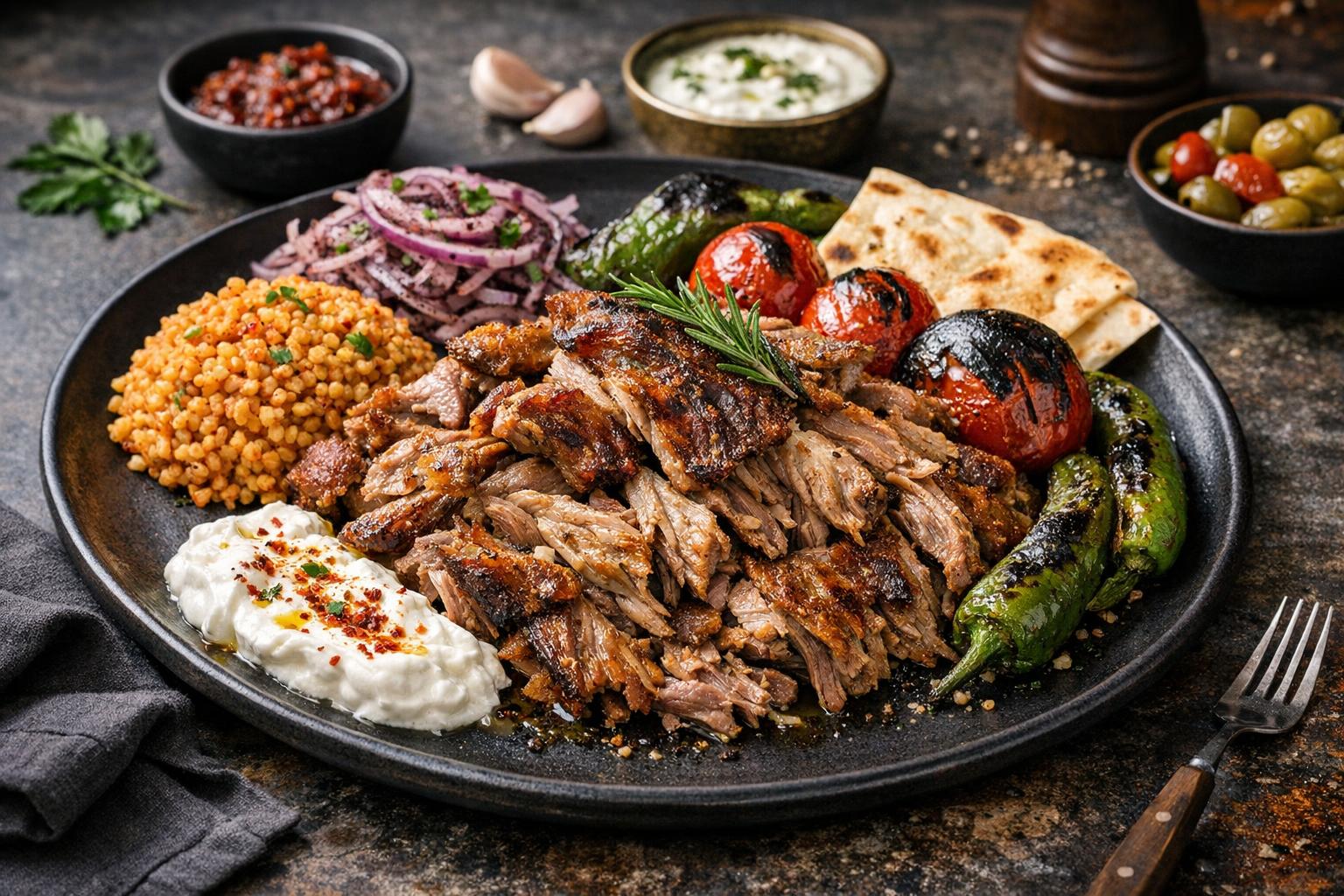
Turkish Tandır Lamb - Slow-Roasted Tender Lamb
Tandır Kuzu
This incredibly tender lamb melts in your mouth with deep, earthy flavors from slow roasting with aromatic spices. The meat develops a beautiful golden-brown crust while staying succulent inside. It's the perfect centerpiece for special occasions that will impress your guests.
Ingredients
Instructions
-
Prepare the lamb
Pat the lamb completely dry with paper towels and score the fat layer in a crosshatch pattern about 1cm deep. Mix salt, cumin, paprika, and black pepper in a small bowl. Rub this spice mixture all over the lamb, working it into the scores. Let it rest at room temperature for 30 minutes to absorb the flavors. Do not skip the scoring as it helps render the fat and allows spices to penetrate.
-
Sear the meat
Heat olive oil in a large oven-safe Dutch oven over medium-high heat for 2 minutes until shimmering. Sear the lamb on all sides for 3-4 minutes per side until deeply golden brown and caramelized. The meat should develop a rich, dark crust with no pink areas showing. Do not move the meat too early or it will stick and tear.
-
Prepare aromatics
Remove the lamb and set aside. Quarter the onions into thick wedges and smash the garlic cloves with the flat side of a knife. Add them to the same pot over medium heat and cook for 5-6 minutes until the onions start to soften and turn golden. The bottom should have nice caramelized bits but no burnt spots. Do not let the garlic burn or it will turn bitter.
-
Build the base
Stir in tomato paste and cook over medium heat for 2 minutes until it darkens and becomes fragrant. Add bay leaves and pour in hot water, scraping up any browned bits from the bottom with a wooden spoon. The liquid should sizzle and steam vigorously when added. Do not use cold water as it will shock the pot and make the meat tough.
-
Start slow cooking
Return the lamb to the pot and nestle it into the liquid. The water should come about halfway up the sides of the meat. Cover tightly with a lid and transfer to a preheated 160°C oven for 1 hour. The liquid should be gently bubbling around the edges. Do not lift the lid frequently as this releases steam and extends cooking time.
-
Continue roasting
Reduce oven temperature to 140°C and continue cooking for another 2-3 hours, basting with pan juices every hour. The meat should be tender enough that a fork easily slides in without resistance. If the liquid reduces too much, add more hot water. Do not let the bottom of the pot go completely dry or the meat will burn.
-
Final browning
Remove the lid and dot the lamb with small pieces of butter. Increase oven temperature to 200°C and roast uncovered for 15-20 minutes until the surface is golden brown and slightly crispy. The internal temperature should reach 75°C and juices should run clear. Do not overcook at this high heat or the meat will dry out.
Tips
Cooking Tips
For extra tender meat, marinate the lamb overnight with the spice rub in the refrigerator, then bring to room temperature before cooking. This allows the spices to penetrate deeper into the meat.
Alternatives
If you can't find lamb shoulder, use lamb leg or even beef chuck roast with similar cooking times. Goat meat is also traditional and creates an authentic flavor profile.
Serving & Storage
Serve immediately with bulgur pilaf, roasted vegetables, and fresh herbs like parsley and mint. Leftover lamb keeps for 3 days in the refrigerator and reheats beautifully in a low oven with a splash of broth.
Leave a Comment