
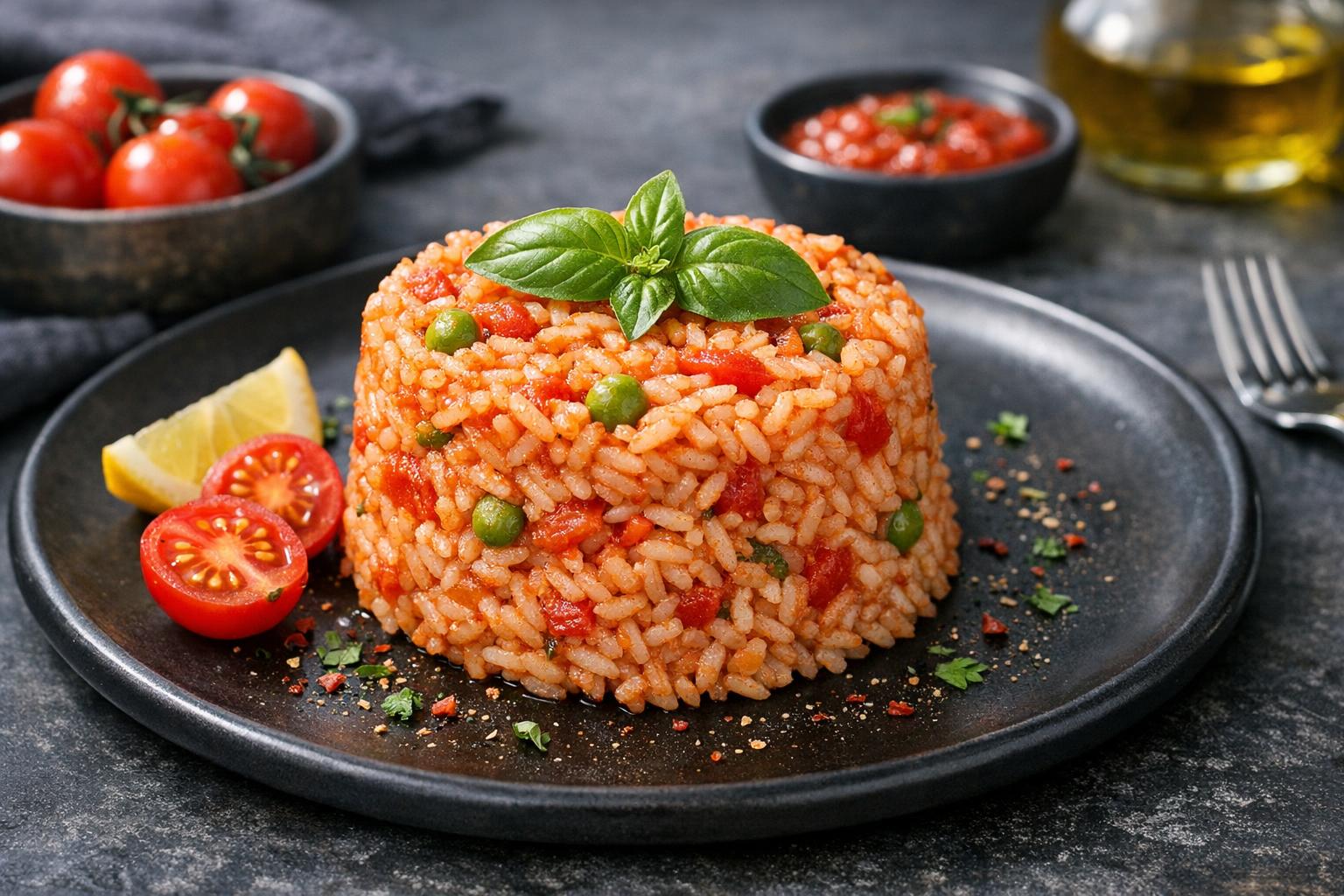
Turkish Tomato Rice Pilaf
Domatesli Pilav
This aromatic rice dish combines fluffy grains with rich tomato flavor and warming spices, creating a beautiful orange-red colored pilaf. The rice absorbs the tangy tomato essence while maintaining perfect texture, with each grain separate and tender. It's the perfect comforting side dish that transforms simple ingredients into something special.
Ingredients
Instructions
-
Prepare the rice
Rinse the rice in cold water until the water runs clear, about 3-4 rinses. Soak the rice in warm water for 15 minutes to help achieve fluffy grains. Drain thoroughly and set aside. Do not skip the soaking as it prevents the rice from becoming sticky.
-
Sauté the onion
Finely dice the onion into 5mm pieces. Heat olive oil in a heavy-bottomed pot over medium heat for 1 minute. Add the onion and cook for 5-7 minutes until soft and translucent, stirring occasionally. Do not let the onion brown or it will become bitter.
-
Add tomato paste
Add the tomato paste to the softened onions and cook over medium heat for 2-3 minutes, stirring constantly. The paste should deepen in color and become fragrant. Do not let it burn or stick to the bottom of the pot.
-
Toast the rice
Add the drained rice to the pot and stir gently to coat each grain with the tomato mixture. Cook over medium heat for 3-4 minutes until the rice looks slightly toasted and glassy. Do not stir too vigorously to avoid breaking the rice grains.
-
Add seasonings
Add salt, black pepper, and paprika to the rice mixture. Stir gently for 30 seconds over medium heat until the spices are evenly distributed and fragrant. Do not add too much salt as the stock may already be seasoned.
-
Add stock and simmer
Pour in the warm chicken stock and add butter pieces on top. Bring to a boil over medium-high heat for 2-3 minutes, then reduce to low heat. Cover tightly and simmer for 15-18 minutes until liquid is absorbed. Do not lift the lid during cooking or steam will escape.
-
Rest and fluff
Remove from heat and let stand covered for 10 minutes to allow the rice to steam and finish cooking. Gently fluff with a fork, working from the edges toward the center. Do not use a spoon as it will mash the rice grains.
Tips
Cooking Tips
Use a heavy-bottomed pot to prevent burning and ensure even heat distribution. The rice-to-liquid ratio should be 1:1.8 for perfect texture.
Alternatives
Substitute chicken stock with vegetable stock for a vegetarian version, or use beef stock for a richer flavor that pairs well with meat dishes.
Serving & Storage
Serve immediately alongside grilled meats, kebabs, or stuffed vegetables. Store leftovers covered in the refrigerator for up to 3 days and reheat gently with a splash of water.


Leave a Comment