
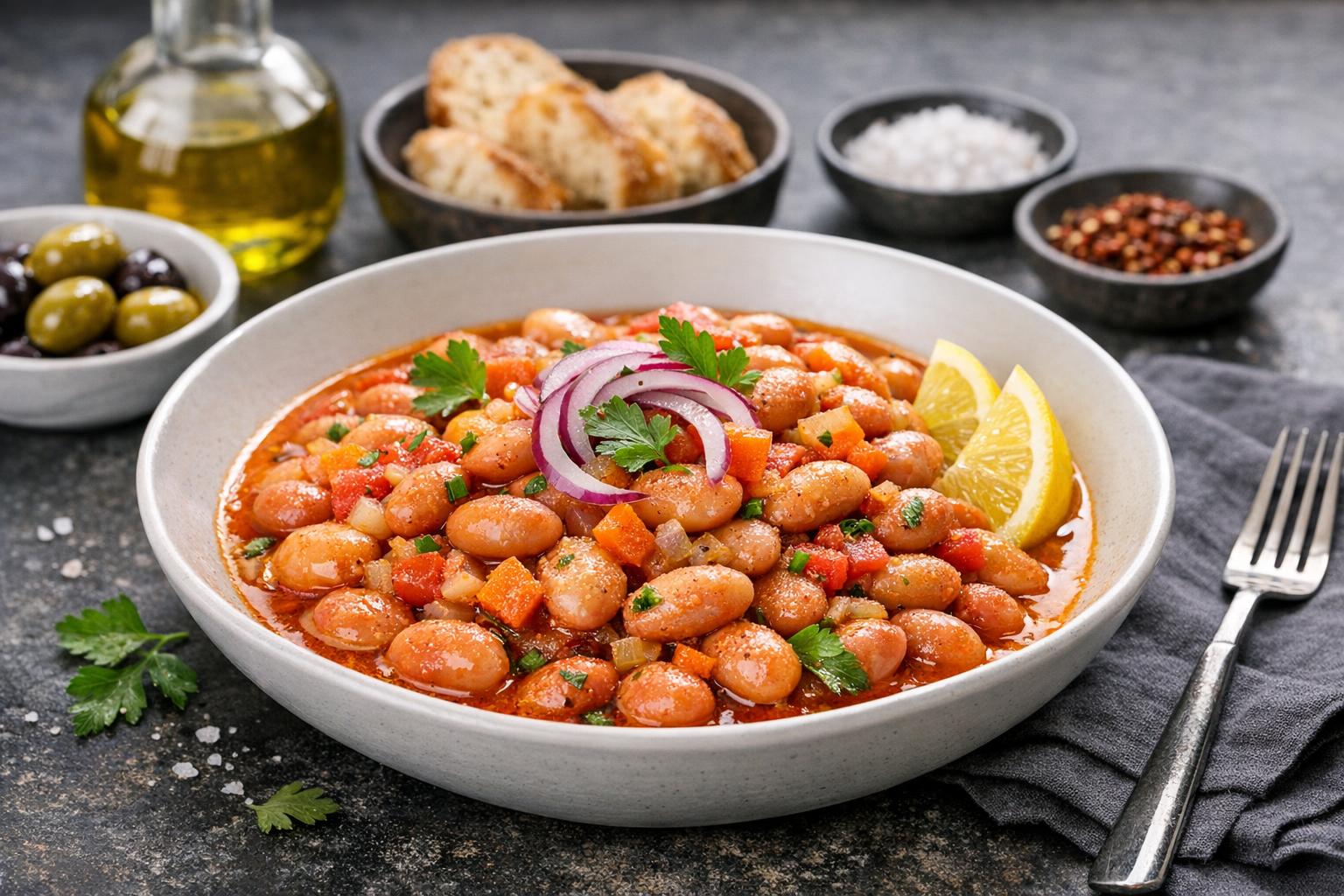
Turkish White Bean Stew in Olive Oil
Barbunya Pilaki
This cold Turkish bean dish offers a refreshing blend of tender white beans in a fragrant olive oil and tomato sauce with herbs. The beans glisten with golden olive oil and bright red tomato pieces, creating an appetizing mosaic of colors. It's the perfect make-ahead dish that tastes even better the next day.
Ingredients
Instructions
-
Prepare the beans
Rinse the dried white beans and soak them in plenty of cold water for 8-12 hours. Drain and rinse again, then place in a large pot with fresh water covering by 5cm. Bring to a boil over high heat for 2-3 minutes, then reduce to medium heat and simmer for 45-60 minutes until tender but still firm. Do not overcook or the beans will become mushy.
-
Prepare the vegetables
Finely dice the onion into 5mm pieces and slice the carrot into thin rounds. Mince the garlic cloves and dice the tomatoes into small cubes, removing seeds. Chop the dill and parsley finely, keeping them separate. Do not chop the herbs too far in advance as they will lose their bright color.
-
Cook the base
Heat the olive oil in a large, heavy-bottomed pan over medium heat for 2 minutes until shimmering. Add the diced onion and cook for 6-8 minutes until soft and translucent. Add the carrots and cook for 4-5 minutes until slightly softened. Do not let the vegetables brown or burn.
-
Add aromatics
Add the minced garlic and tomato paste to the pan, stirring constantly over medium heat for 1-2 minutes until fragrant and the paste darkens slightly. Add the diced tomatoes, bay leaves, sugar, salt, and pepper. Cook for 8-10 minutes until the tomatoes break down and the mixture smells sweet and aromatic. Do not cook on high heat or the garlic will burn.
-
Combine and simmer
Add the drained cooked beans to the vegetable mixture along with 200ml of the bean cooking water. Bring to a gentle simmer over medium-low heat and cook for 15-20 minutes, stirring occasionally, until the liquid reduces slightly and the flavors meld. The beans should be glossy and coated in sauce. Do not boil vigorously or the beans will break apart.
-
Finish and cool
Remove from heat and stir in the chopped dill and parsley, reserving some for garnish. Let cool completely at room temperature for 1-2 hours, then refrigerate for at least 2 hours before serving. The pilaki should be served cold or at room temperature with fresh herbs on top and lemon wedges. Do not serve hot as the flavors need time to develop.
Tips
Cooking Tips
Save some of the bean cooking liquid to adjust consistency - pilaki should be saucy but not soupy, and the liquid helps beans stay moist when cooling.
Alternatives
If fresh tomatoes aren't available, use 400g canned diced tomatoes instead, but reduce cooking time by 3-4 minutes as they break down faster.
Serving & Storage
Serve with warm Turkish bread, feta cheese, and olives as part of a mezze spread. Pilaki keeps in the refrigerator for up to 4 days and tastes better each day.


Leave a Comment