
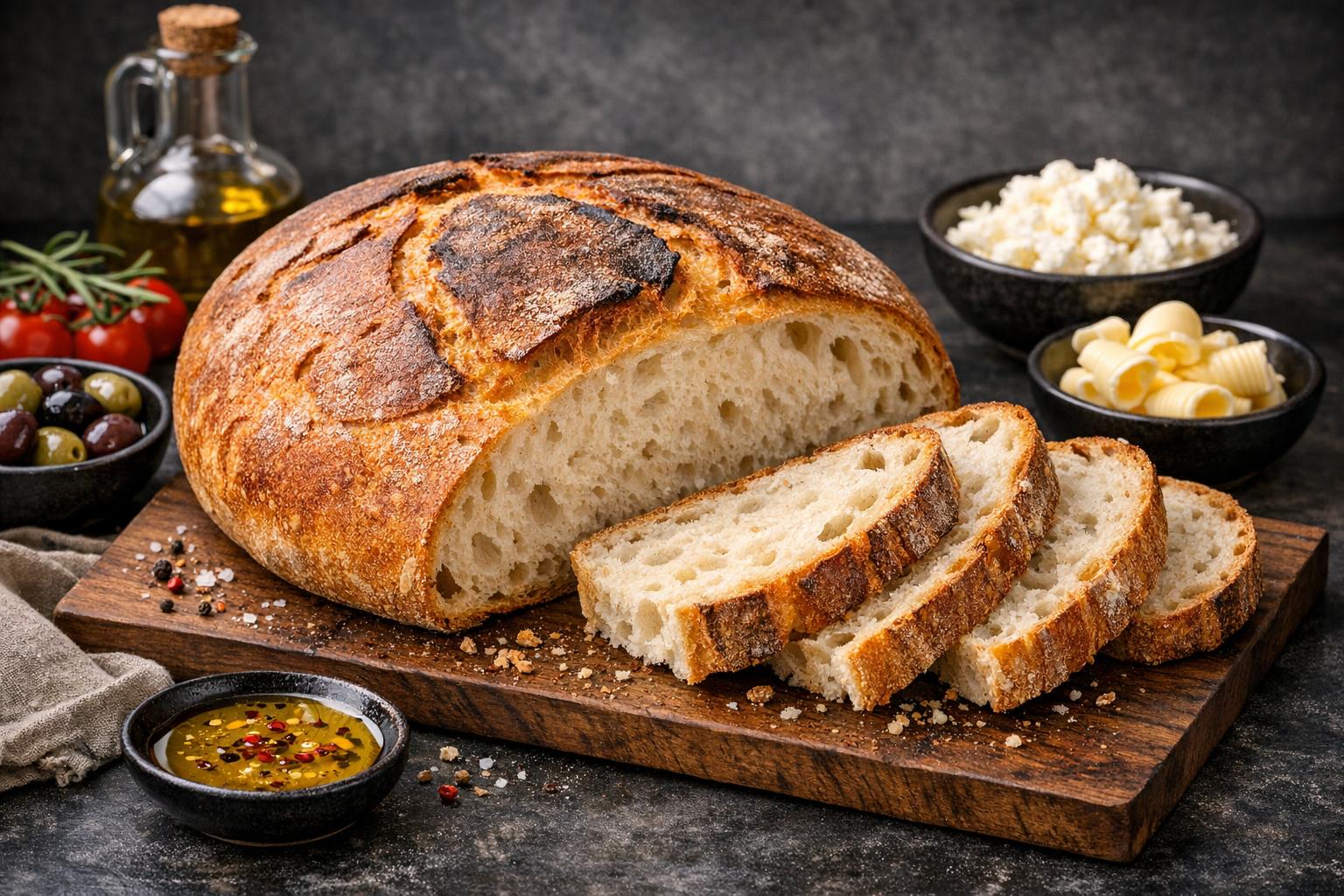
Trabzon Vakfıkebir Bread - Traditional Black Sea Turkish Bread
Trabzon Vakfıkebir Ekmeği
This traditional Black Sea bread has a distinctive tangy flavor from natural fermentation and a wonderfully chewy, dense texture. The dark, crusty exterior gives way to a moist, slightly sour crumb that's perfect for tearing by hand. It's an authentic taste of Trabzon's culinary heritage that transforms any meal into something special.
Ingredients
Instructions
-
Activate the yeast
Mix yeast with sugar in 100ml warm water (around 38°C). Let stand for 8-10 minutes until foamy and bubbly on top. The mixture should smell yeasty and double in volume. Do not use water that's too hot or it will kill the yeast.
-
Combine dry ingredients
In a large bowl, whisk together bread flour, whole wheat flour, and salt for 1-2 minutes until evenly distributed. Make a well in the center that's about 10cm wide. Do not skip this step as it ensures even salt distribution.
-
Form the dough
Pour the foamy yeast mixture, remaining warm water, olive oil, and yogurt into the flour well. Mix with a wooden spoon for 3-4 minutes until a shaggy, sticky dough forms. The dough should be quite wet and difficult to handle. Do not add extra flour at this stage.
-
Knead the dough
Turn dough onto a lightly floured surface and knead vigorously for 12-15 minutes until smooth and elastic. The dough should spring back when poked and feel slightly tacky but not sticky. Do not over-flour the surface or the bread will be dense.
-
First rise
Place dough in an oiled bowl, cover with damp cloth, and let rise in a warm place for 2-3 hours until doubled in size. The dough should jiggle when the bowl is gently shaken. Do not rush this process as slow fermentation develops flavor.
-
Shape and second rise
Punch down dough gently and shape into a round loaf. Place on parchment-lined baking sheet, cover, and rise for 1-1.5 hours until increased by 50%. The dough should feel puffy and leave a slight indent when gently pressed. Do not let it over-proof or it will collapse.
-
Score and bake
Preheat oven to 220°C. Score the top with a sharp knife in a cross pattern about 1cm deep. Bake for 35-40 minutes until the crust is dark brown and the internal temperature reaches 95°C. Do not open the oven door for the first 20 minutes.
-
Cool properly
Cool on a wire rack for at least 2 hours before cutting. The bread should sound hollow when tapped on the bottom and the crust should be firm and dark. Do not cut while warm or the interior will be gummy.

Leave a Comment