
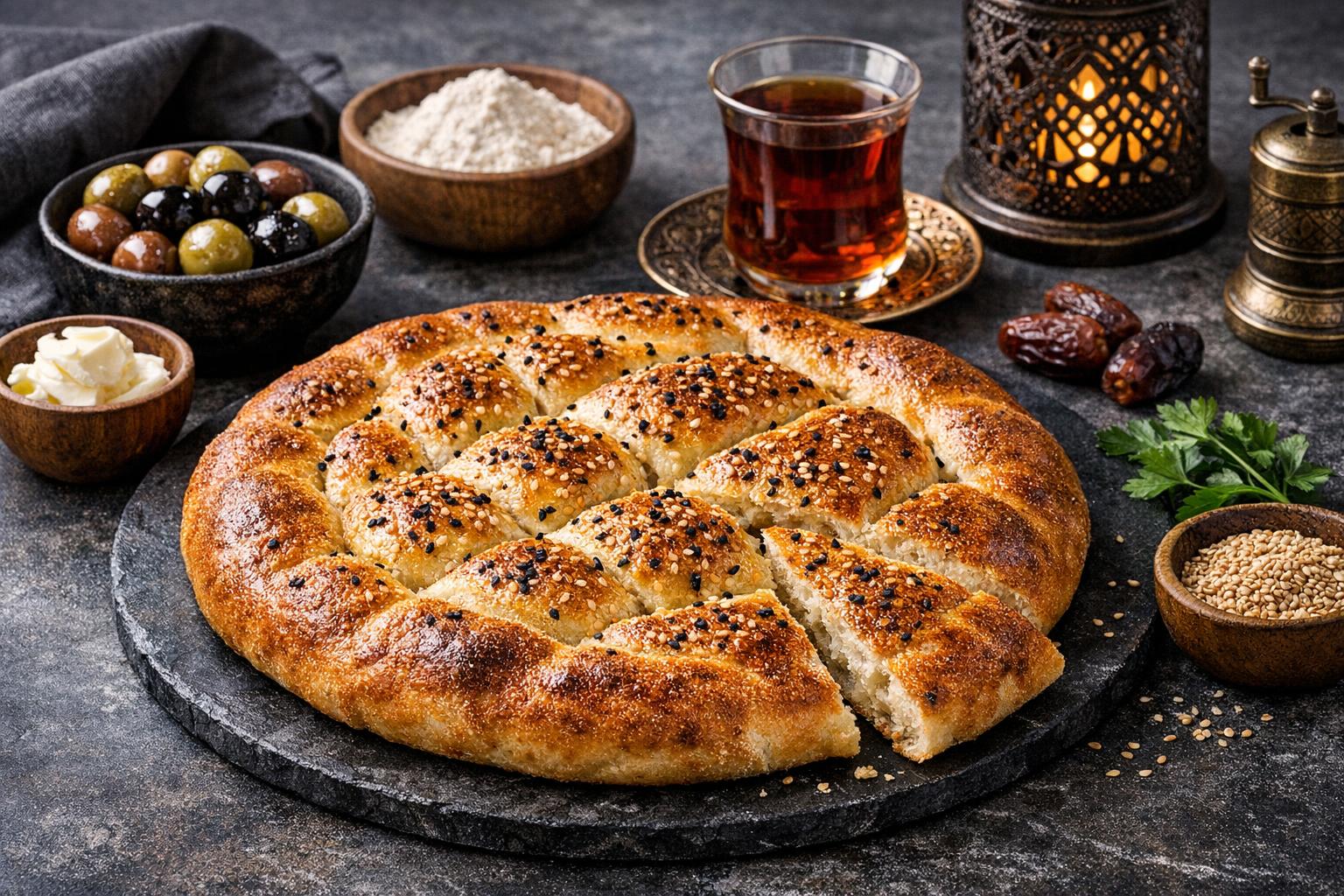
Traditional Turkish Ramadan Pide Bread
Ramazan Pidesi
This traditional Turkish flatbread has a soft, pillowy texture with a golden crust and is topped with sesame and nigella seeds. The oval-shaped bread has distinctive finger impressions that create pockets perfect for absorbing flavors. It's the essential bread for breaking fast during Ramadan and brings families together around the iftar table.
Ingredients
Instructions
-
Prepare yeast mixture
Combine warm water, sugar, and instant yeast in a small bowl, whisking gently. Let stand at room temperature for 5-8 minutes until the mixture becomes foamy and bubbles appear on the surface. Do not use water that's too hot as it will kill the yeast.
-
Make the dough
In a large bowl, combine flour and salt, mixing well. Add the foamy yeast mixture and olive oil, stirring with a wooden spoon for 2-3 minutes until a shaggy dough forms. Do not overmix at this stage or the bread will be tough.
-
Knead the dough
Turn the dough onto a floured surface and knead vigorously for 8-10 minutes until smooth and elastic. The dough should spring back when pressed with your finger and feel slightly tacky but not sticky. Do not add too much flour or the bread will be dense.
-
First rise
Place the dough in an oiled bowl, turning to coat all sides. Cover with a damp towel and let rise in a warm place for 60-90 minutes until doubled in size and springs back slowly when poked. Do not let it over-rise or the texture will be compromised.
-
Shape the pide
Punch down the dough and divide into 4 equal portions. Roll each piece into an oval shape about 20cm long and 15cm wide. Place on parchment-lined baking sheets, spacing them apart. Do not make them too thin or they won't have the characteristic pillowy texture.
-
Create finger impressions
Using your fingertips, press deep dimples all over the surface of each pide, creating a distinctive pattern. Press firmly but gently to avoid tearing the dough. Cover and let rest for 20-30 minutes until slightly puffed. Do not skip this rest time or the bread will be dense.
-
Apply egg wash and seeds
Preheat oven to 220°C (200°C fan). Whisk together egg yolk and milk to create a glossy wash. Brush each pide generously with the mixture, then sprinkle with sesame and nigella seeds, pressing lightly to adhere. Do not brush too heavily or the seeds won't stick properly.
-
Bake the pide
Bake for 15-18 minutes until golden brown and hollow-sounding when tapped on the bottom. The internal temperature should reach 90°C and the crust should be firm but not hard. Do not overbake or the bread will become dry and tough.
Tips
Cooking Tips
Create steam in the oven by placing a pan of hot water on the bottom rack during the first 10 minutes of baking - this gives the pide its characteristic soft crust and helps it rise properly.
Alternatives
If you can't find nigella seeds, substitute with poppy seeds or additional sesame seeds, though the traditional flavor will be different and slightly less aromatic.
Serving & Storage
Serve warm from the oven with olive oil, cheese, or honey for dipping. Store wrapped in a clean kitchen towel for up to 2 days, and refresh in a 150°C oven for 5 minutes before serving.

Leave a Comment