
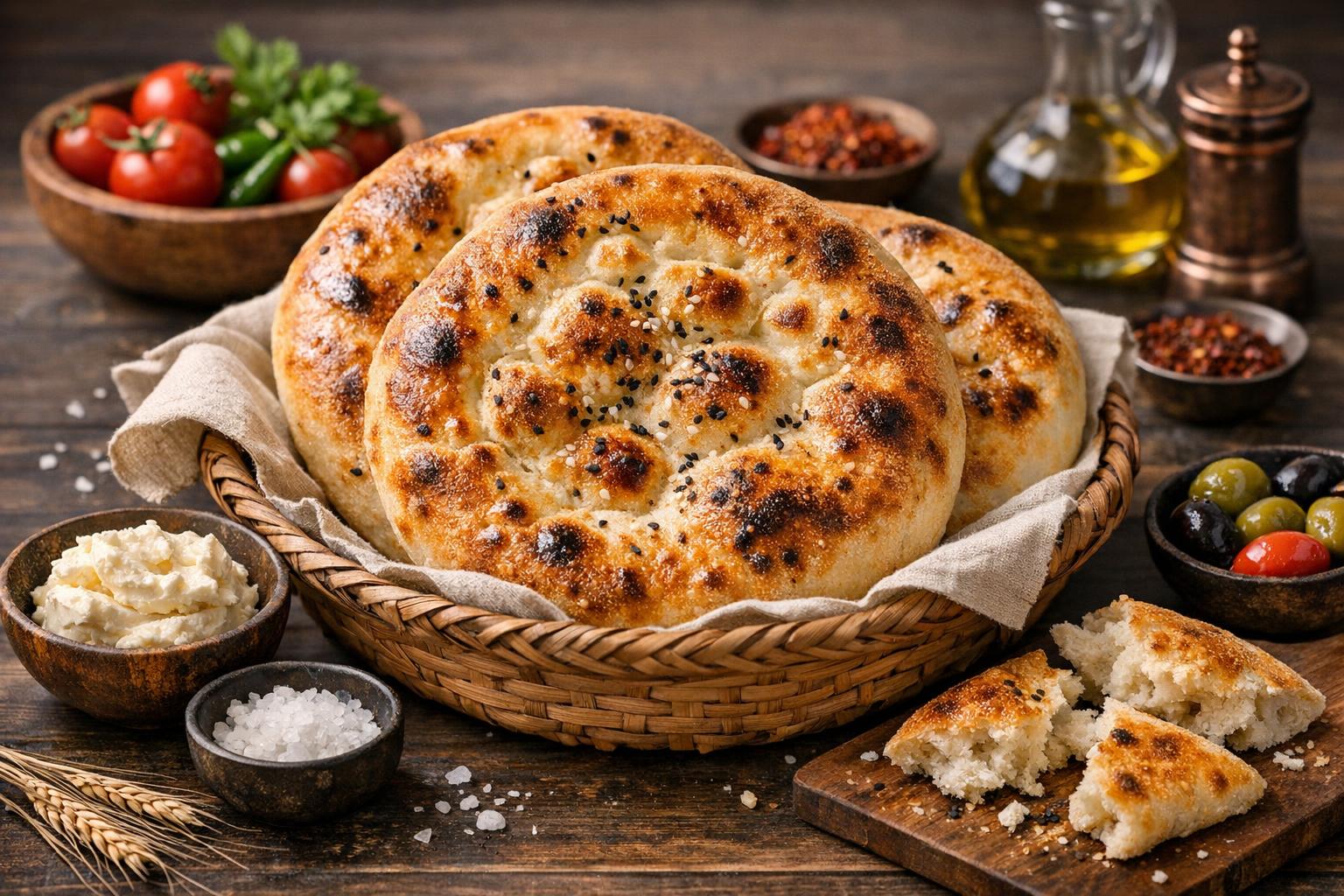
Traditional Turkish Tandoor Bread
Tandır Ekmeği
This rustic Turkish bread has a wonderfully chewy texture with a crispy, golden crust and soft, airy interior. The large, round loaves have a distinctive dimpled surface and earthy aroma from traditional clay oven baking. Perfect for soaking up stews or enjoying with cheese and olives.
Ingredients
Instructions
-
Activate the yeast
Combine warm water (around 38°C), sugar, and yeast in a small bowl. Let it sit at room temperature for 8-10 minutes until the mixture becomes foamy and bubbly on top. The water should not be too hot as it will kill the yeast.
-
Mix the dough
In a large mixing bowl, combine flour and salt. Make a well in the center and pour in the activated yeast mixture and olive oil. Mix with a wooden spoon for 3-4 minutes until a shaggy dough forms. Do not overmix at this stage.
-
Knead the dough
Turn the dough onto a lightly floured surface and knead vigorously for 8-10 minutes until it becomes smooth and elastic. The dough should spring back when poked gently with your finger. Do not add too much flour as the dough should remain slightly sticky.
-
First rise
Place the dough in an oiled bowl, cover with a damp towel, and let it rise in a warm place for 60-90 minutes until doubled in size. The dough should feel light and airy when gently pressed. Avoid drafty areas that might slow the rising process.
-
Shape and dimple
Punch down the dough and divide into 2 equal portions. Shape each into a round ball and place on parchment-lined baking sheets. Using your fingertips, press dimples all over the surface about 2cm apart. Do not press too deeply or the bread will be too flat.
-
Second rise
Brush the surface lightly with olive oil and sprinkle with nigella seeds. Cover loosely with a towel and let rise for 30-40 minutes until slightly puffed. The dimples should still be visible but less pronounced.
-
Bake the bread
Preheat oven to 220°C with a baking stone or heavy baking sheet inside. Bake the loaves for 25-30 minutes until deep golden brown and hollow-sounding when tapped on the bottom. Do not open the oven door during the first 15 minutes of baking.
Tips
Cooking Tips
Place a pan of hot water on the bottom oven rack during baking to create steam, which helps develop a crispy crust while keeping the interior moist and tender.
Alternatives
If you can't find nigella seeds, substitute with sesame seeds or coarse sea salt for a different but authentic flavor profile that complements the bread's rustic character.
Serving & Storage
Serve warm with Turkish breakfast items like cheese, olives, and tomatoes. Store wrapped in a kitchen towel for 2 days, or freeze for up to 3 months and reheat in a 180°C oven for 5 minutes.

Leave a Comment