
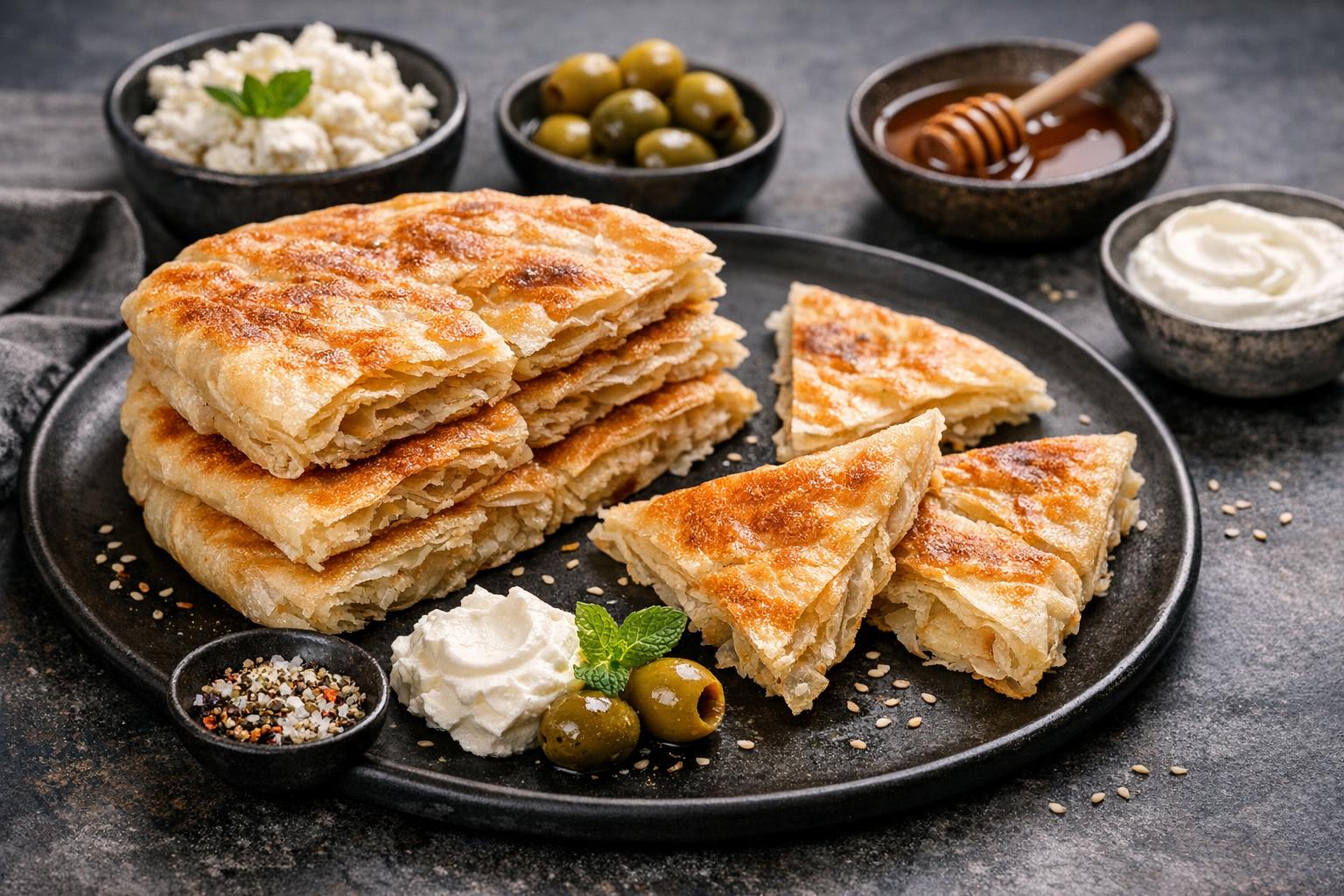
Turkish Fetir - Flaky Layered Pastry with Butter
Fetir
Fetir is a delicate, flaky pastry with paper-thin layers that melt in your mouth with a rich, buttery taste. The golden-brown spirals create beautiful layers that separate easily when torn apart. This traditional Turkish pastry is perfect for breakfast or tea time and showcases the art of working with thin dough.
Ingredients
Instructions
-
Make the dough
Combine flour and salt in a large bowl, then gradually add warm water and olive oil. Mix with your hands until a soft dough forms, about 3-4 minutes. The dough should be slightly sticky but not wet. Do not add extra flour as this will make the layers tough.
-
Knead until smooth
Turn the dough onto a lightly floured surface and knead vigorously for 8-10 minutes until completely smooth and elastic. The dough should spring back when pressed with your finger. Do not rush this step as proper gluten development is crucial for thin layers.
-
Rest the dough
Divide dough into 6 equal portions and shape into balls. Cover with a damp cloth and let rest at room temperature for 30 minutes. The dough should feel relaxed and stretch easily without tearing. Do not skip the resting time as tense dough will tear when stretched.
-
Prepare butter mixture
Melt butter in a small saucepan over low heat for 2-3 minutes until completely liquid but not hot. Stir in cornstarch until smooth and no lumps remain. The mixture should coat the back of a spoon lightly. Do not let the butter get too hot or it will make the dough soggy.
-
Roll paper-thin sheets
Working with one dough ball at a time, roll on a floured surface using a thin rolling pin. Roll from center outward for 5-7 minutes until the dough is translucent and you can almost read through it. The sheet should be roughly 40cm diameter. Do not tear the dough - if it resists, let it rest 5 more minutes.
-
Brush and roll
Brush the entire surface with the butter mixture using a pastry brush, leaving no dry spots. Starting from one edge, tightly roll the sheet into a long rope, then coil into a spiral. The layers should be distinct but not loose. Do not stretch the dough while rolling or layers will merge.
-
Final rest and bake
Place spirals on parchment-lined baking sheets, brush tops with beaten egg yolk mixed with milk, and bake in preheated 190°C oven for 25-30 minutes until deep golden brown. The pastry should sound hollow when tapped on the bottom. Do not open the oven door during the first 20 minutes or the layers may collapse.
Tips
Cooking Tips
Keep unused dough balls covered with a damp cloth while working with others, as exposed dough develops a skin that prevents proper stretching. Work on a large, clean surface and dust lightly with flour only when needed.
Alternatives
If you don't have cornstarch, use the same amount of all-purpose flour mixed with the melted butter. This creates slightly denser layers but still produces good results with proper technique.
Serving & Storage
Serve fetir warm from the oven when layers are most distinct. Traditional accompaniments include Turkish tea, honey, or white cheese. Store leftover fetir covered at room temperature for 2 days and reheat briefly in a 150°C oven to restore crispness.

Leave a Comment