
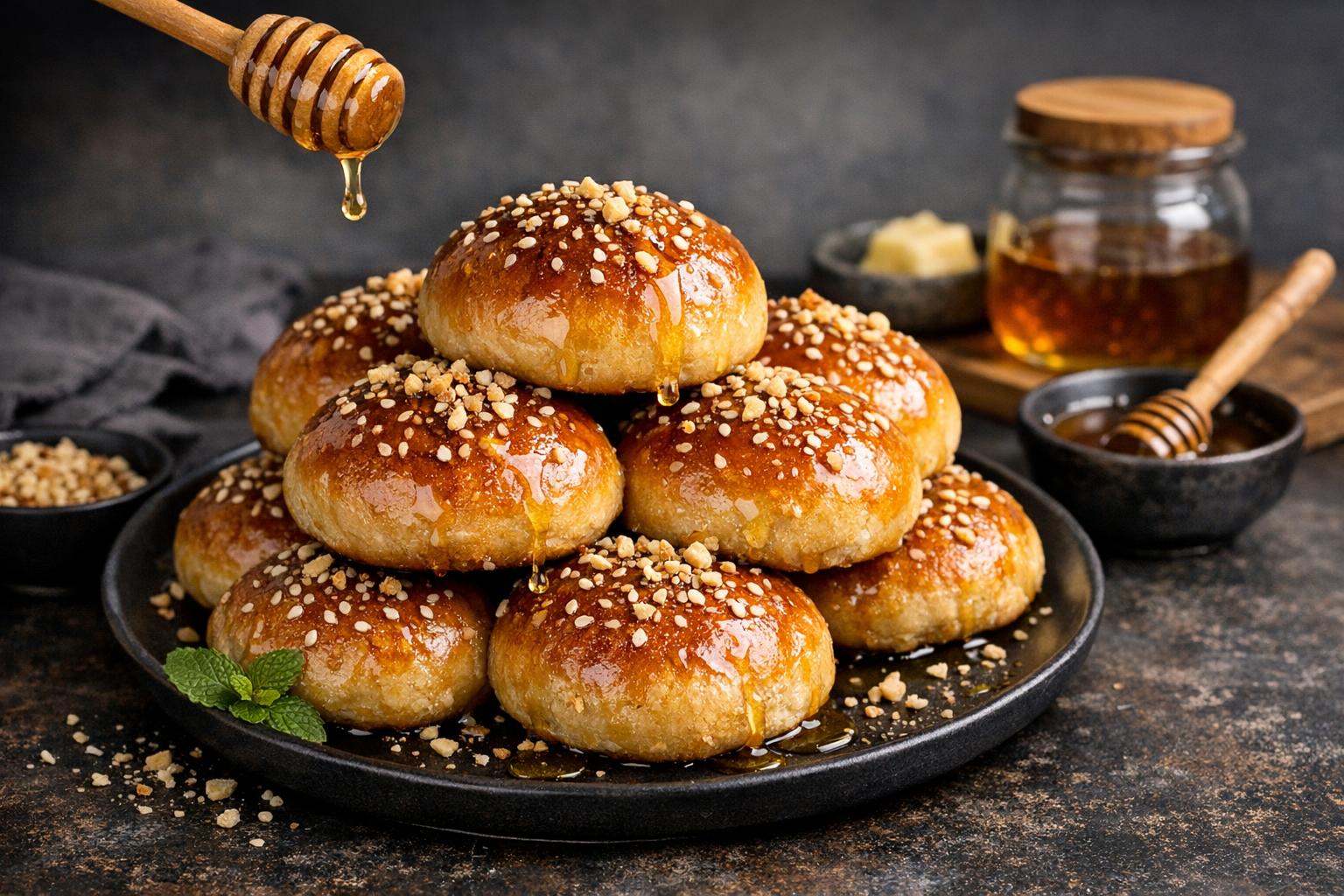
Turkish Honey Sweet Bread (Balli Corek)
Ballı Çörek
This traditional Turkish sweet bread has a tender, slightly dense crumb with a golden honey glaze that creates a beautiful shiny finish. The dough is enriched with eggs and butter, giving it a rich flavor that's perfectly balanced by the floral sweetness of honey. It's an ideal treat for breakfast with Turkish tea or as an afternoon snack that brings comfort and warmth to any gathering.
Ingredients
Instructions
-
Activate the yeast
Dissolve the yeast in warm water (should feel just warm to touch, about 37°C) with 1 teaspoon of sugar. Let stand for 8-10 minutes until foamy and bubbly on top. The mixture should smell yeasty and have doubled in volume. Do not use water that's too hot as it will kill the yeast.
-
Prepare wet ingredients
Melt the butter over low heat for 2-3 minutes until just liquefied, then let cool slightly. In a large bowl, whisk together the remaining sugar, eggs, yogurt, melted butter, and olive oil for 2-3 minutes until well combined and smooth. The mixture should be pale and creamy. Do not add hot butter as it will cook the eggs.
-
Form the dough
Add the activated yeast mixture to the egg mixture and stir gently. Gradually add flour and salt, mixing with a wooden spoon for 3-4 minutes until a shaggy dough forms. The dough will look rough and slightly sticky. Do not add too much flour at once or the bread will be dense.
-
Knead the dough
Turn dough onto a lightly floured surface and knead by hand for 8-10 minutes until smooth and elastic. The dough should spring back when poked and feel slightly tacky but not sticky. Add tiny amounts of flour only if absolutely necessary. Do not over-knead or the bread will be tough.
-
First rise
Place dough in an oiled bowl, cover with damp cloth, and let rise in a warm place for 60-75 minutes until doubled in size. The dough should feel light and airy when gently poked. Room temperature should be around 24-26°C for best results. Do not rush this step or place in overly hot areas.
-
Shape and second rise
Punch down dough gently and divide into 2 equal portions. Shape each into a round loaf and place on parchment-lined baking sheet, spacing 10cm apart. Cover and let rise for 35-45 minutes until visibly puffed and increased by half. They should feel light when gently lifted. Do not let them over-proof or they'll collapse.
-
Prepare for baking
Preheat oven to 180°C for 15 minutes. Whisk egg yolk with milk until smooth. Brush this wash gently over the surface of each loaf using a pastry brush, creating an even golden coating. The wash should glisten but not pool. Do not press too hard or you'll deflate the dough.
-
Bake the bread
Bake on middle rack for 25-30 minutes until golden brown and hollow-sounding when tapped on bottom. Internal temperature should reach 88-90°C. The crust should be deep golden and firm to touch. Do not open oven door for first 20 minutes or the bread may collapse.
-
Apply honey glaze
While bread is still hot from oven, brush generously with honey using a pastry brush, applying multiple thin coats over 3-4 minutes. The honey should soak in slightly and create a glossy finish. Work quickly while bread is warm for best absorption. Do not apply honey to completely cooled bread as it won't penetrate properly.
Tips
Cooking Tips
For extra soft bread, replace 50ml of water with warm milk, and tent the loaves with foil if they're browning too quickly during the last 10 minutes of baking.
Alternatives
If you don't have yogurt, substitute with an equal amount of sour cream or buttermilk, which will give a slightly tangier flavor and similar tender crumb.
Serving & Storage
Serve at room temperature with Turkish tea or coffee, and store covered for up to 4 days - the honey glaze keeps it moist. For longer storage, freeze unglazed bread and apply honey after thawing and rewarming.


Leave a Comment